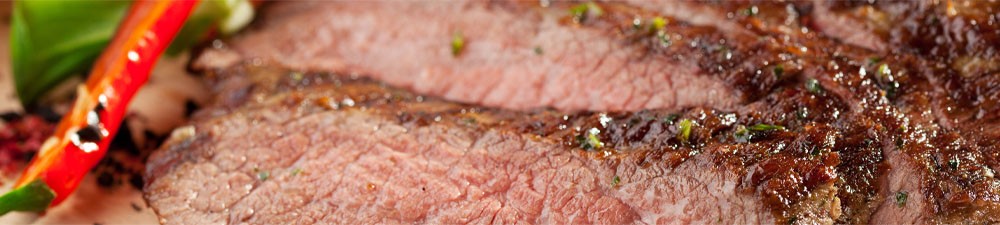
What is a flank steak?
Flank steak is cut from the flank (belly area) of the cow. It's a flat, elongated piece of meat, usually 20 to 30 centimetres long and 10 to 15 centimetres wide. Each cow yields only two flank steaks.
The flank is a muscle that's constantly in motion. This results in a firm texture with a pronounced beef flavour. Flank steak is lean and contains relatively little intramuscular fat. The flavour is therefore pure and intense, without being heavy. It's a steak you truly taste — a real meat lover's steak.
In the Netherlands, flank steak is also known as vinkenlap. The English name 'flank steak' has become the common term, even among most Dutch butchers and BBQ enthusiasts.
Flank steak in Dutch
Looking for the Dutch name for flank steak? In the Netherlands this cut is known as vinkenlap or vanglap. The name refers to the vang: the belly area of the cow, between the rump and the chest. In France the same cut is called bavette de flanchet, and in the US it's sometimes also called London Broil — although that actually refers to a preparation method where the meat is marinated, grilled and then sliced thin across the grain.
What is the difference between flank steak and bavette?
Flank steak and bavette are regularly confused with each other, and not without reason. Both cuts come from the flank of the cow and fall into the category of working cuts. Yet they are different pieces of meat with a different character on your plate.
The easiest way to tell them apart is the grain. Bavette has long, coarse muscle fibres that clearly run in one direction. Flank steak has a tighter fibre structure. Place them side by side and you'll see the difference immediately. In the mouth you'll notice a slightly firmer bite with flank steak, while bavette feels looser and juicier.
An important practical difference is that flank steak is slightly more forgiving to cook. Its tighter structure means it dries out less quickly if it spends an extra half minute on the grill. With bavette you lose that margin faster. On the other hand, bavette absorbs a marinade slightly better due to its coarser grain.
What matters with both steaks is slicing across the grain. And for both: buy from a well-marbled breed, otherwise you'll end up with a tough disappointment.
Flank steak vs skirt steak
Besides bavette, flank steak is also often confused with skirt steak. Although both steaks fall into the 'working cut' category, the differences are clear.
Skirt steak (also known as onglet) comes from the diaphragm of the cow, while flank steak is cut from the abdominal muscles. Skirt steak is thinner, longer and has an even looser fibre structure. The meat is also slightly fattier and juicier than flank steak.
Flank steak is the leaner alternative with a slightly more subtle flavour. Both steaks should be cooked quickly over high heat and sliced across the grain.
Why buy flank steak at The Butchery?
Flank steak is a cut where sloppy butchery is immediately punished. The steak is flat, relatively thin and has barely any intramuscular fat to compensate for cooking errors. An uneven thickness, leftover silverskin or loose edges? Then one end will be done while the other is still raw. With a steak that spends only 2 to 4 minutes per side on the grill, there's simply no margin for sloppiness. That's why we pay so much attention to it.
How we make your flank steak grill-ready
As soon as the meat arrives, one of our Master Butchers checks the flank steak for smell, texture and marbling. Only meat that meets our standards makes it through. Then follows the triple trim process:
The silverskin is the biggest culprit with flank steak. It's a thin, transparent membrane that runs across the surface of the steak. During cooking this membrane shrinks and causes the meat to curl. This is exactly what you don't want with a flat steak that needs to cook evenly. Our Master Butchers remove this membrane entirely by hand, without cutting away unnecessary meat. It's precise work — trim too much and you waste meat, trim too little and the membrane will still shrink on the grill.
Next, the uneven edges and protruding pieces are trimmed away. A flank steak from the whole flank naturally has thinner ends and thicker parts in the middle. By carefully trimming those edges, you get a steak with as uniform a thickness as possible. The result is even cooking across the entire steak.
Flash-frozen, vacuum packed and weight guarantee
After trimming, the flank steak is immediately individually packed in our 4-layer vacuum foil (heat-resistant, so also suitable for sous-vide) and within the hour flash-frozen at -40°C. Especially with a lean cut like flank steak, that makes all the difference: slow freezing damages the tight muscle fibres and causes moisture loss after thawing. With flash-freezing everything stays intact.
In addition, you always get the weight you pay for. Packaging, trimmed pieces and meat juices don't count. Want to know more about how we work? Read all about our craft.
Which breed of flank steak should you choose?
Which flank steak suits you best depends on what you're looking for. The quality of the breed makes a big difference with flank steak. Because the meat is lean and contains little intramuscular fat, a well-marbled breed is essential. A flank steak from a lean dual-purpose or grass-fed animal can quickly become dry and tough. With the right breed choice, however, you get a steak that bursts with flavour and is still tender.
Bert-Jan's favourite: Australian Wagyu
Ask Bert-Jan about his favourite flank steak and the answer is immediately the Australian Wagyu flank steak. And once you understand why, you'll immediately understand what makes this steak so special.
Flank steak is naturally lean and firm in structure. For most breeds, that's exactly the character you're looking for. But with Australian Wagyu something special happens. Because the meat has so much intramuscular fat, it all melts through the meat. You get the full, rich flavour of a working cut, but much softer than with other breeds.
Premium at an accessible price: USDA Prime Black Angus
Flank steak is naturally one of the most affordable steaks. And that makes it a great entry point to experience the absolute best: USDA Prime Black Angus. USDA Prime is the highest quality grade (only about 3% of all American beef achieves this grading). Normally you pay a premium for that quality, but because flank steak as a cut is already more accessibly priced, you get the very best Angus beef here for a surprisingly sharp price.
The absolute best: Japanese A5 Wagyu
For those who make no compromises, there is the Japanese A5 Wagyu flank steak. This meat comes from Japanese Black cattle from Kagoshima, one of Japan's most renowned Wagyu regions. The animals are raised in complete tranquillity on a special diet, without hormones or unnecessary additives.
Only cattle that score the maximum on all assessment criteria (fat distribution, texture, colour and flavour) receive the A5 label. With a BMS of 12, this meat is marbled to the very last fibre. The result is a texture that almost melts on your tongue, with a deep flavour you won't find anywhere else. And with flank steak in particular, that's extraordinary: the firmness of the working muscle gives the steak just enough character to not completely melt away. A unique combination you won't experience in the same way with any other cut.
Not sure which breed suits you? Feel free to get in touch with us — our butchers are happy to help.
How do you cook flank steak?
Cooking flank steak requires precision. It's a lean working cut that you don't want to overcook, otherwise it becomes tough and dry. We recommend not cooking flank steak beyond medium. Below are the most popular methods.
Flank steak on the BBQ
The BBQ is the ideal place for flank steak. Due to the thin cut of the meat, direct grilling over high heat is the best method. Quick and hot, so you get a crispy crust while the meat stays juicy inside.
- Take the flank steak out of the fridge at least 30 minutes before cooking.
- Pat the meat dry and season generously with salt and pepper.
- Make sure your grate is clean and scorching hot. This prevents sticking and gives beautiful grill marks.
- Place the flank steak on the grate and grill 2 to 4 minutes per side over direct heat.
- Want a crosshatch pattern? Rotate the steak a quarter turn halfway through on the same side. Then flip and repeat.
- Grill to a core temperature of 50°C (the steak will rise to 52–54°C while resting).
- Rest for 5 to 10 minutes under aluminium foil.
- Slice across the grain into thin strips and finish with sea salt.
Flank steak in the pan
- Pat the flank steak dry with kitchen paper and season with salt.
- Heat a heavy pan (preferably cast iron) over high heat with a splash of high smoke point oil.
- Cook the flank steak 2 to 3 minutes per side for medium rare.
- In the last few minutes, reduce the heat slightly and add a knob of butter, a clove of garlic and some rosemary.
- Spoon the butter over the meat (basting).
- Rest the meat for 5 to 10 minutes and slice across the grain.
Flank steak in the oven
Want to cook a whole flank steak in the oven? Preheat the oven to 220°C. First sear the flank steak briefly in a scorching hot pan: 1 to 2 minutes per side. Then place the steak in a roasting dish and cook in the oven to a core temperature of 50°C. For a flank steak, that's only 5 to 10 minutes. Let the meat rest before slicing.
Flank steak sous-vide
Sous-vide is an excellent method for flank steak. Because you set the temperature to the exact degree, it's virtually impossible to overcook the meat. And with a lean cut like flank steak, that's a major advantage.
- Set the water bath to 52°C for medium rare (or 55°C for medium).
- Place the flank steak in the water bath. You can use our vacuum packaging directly (heat-resistant up to 70°C).
- Cook the flank steak for 2 to 4 hours. The longer cooking time makes the tight fibres extra tender without overcooking the meat.
- Remove the steak from the water bath and pat dry.
- Sear briefly in a scorching hot pan or on the BBQ: maximum 1 minute per side.
- Rest for 5 minutes and slice across the grain.
Flank steak core temperature
Use a meat thermometer for the perfect result. Follow these temperatures:
- Rare: 49–51°C
- Medium rare: 52–54°C (our recommendation)
- Medium: 55–57°C
- Well done: 62°C+
Keep in mind that the meat will rise another 2 to 3 degrees in temperature after cooking (carryover cooking). So pull your flank steak off the heat slightly before your desired final temperature.
Slicing flank steak
Slicing is perhaps the most important part of cooking flank steak. Flank steak has clearly visible muscle fibres running in one direction. Always slice across (perpendicular to) the grain, in thin strips of no more than half a centimetre. This breaks up the long fibres and makes the meat tender.
Slice with the grain? Then we can tell you right now the steak won't taste good. Want to know more? Read our article on how to slice steaks.
Marinating flank steak
Flank steak is very well suited for a marinade. Due to the tight fibre structure, a marinade penetrates the meat well. Marinating not only adds flavour, but also helps to tenderize the fibres slightly.
A few combinations we recommend:
- Classic: olive oil, garlic, rosemary, lemon and black pepper.
- Asian: soy sauce, sesame oil, ginger, garlic and a splash of rice vinegar.
- Whiskey: whisky, brown sugar, garlic, smoked paprika and chipotle.
- Argentinian: chimichurri of parsley, oregano, garlic, red pepper and red wine vinegar.
Marinate the flank steak for at least 2 hours, but longer is better. Ideally 4 to 12 hours in the fridge. Just be careful not to make the marinade too acidic — too much acid can actually make the meat tougher.
How many grams of flank steak per person?
Flank steak is wonderful to cook whole and then carve at the table. Use the following weights as a guide:
As a main course:
- Average appetite: 150–200 grams
- Large appetite: 250–350 grams
- Carnivore: 400+ grams
To share for 2 people:
- Average appetites: 400 grams
- Large appetites: 500+ grams
BBQ with multiple meats (share):
Flank steak recipes
Flank steak is incredibly versatile. It lends itself to a wide range of cuisines and preparations. Get inspired by our favourite recipes:
Thanks to its flat shape, flank steak is also very well suited for stuffing, rolling and serving in slices. Think fajitas, Korean bulgogi or served with chimichurri and baked potatoes.
Nutritional values flank steak
Flank steak is a lean steak and therefore popular among athletes and health-conscious meat lovers. Per 100 grams, flank steak contains approximately 157 calories, 27.1 grams of protein and only 5.4 grams of fat. It contains no carbohydrates and is therefore also suitable for low-carb diets such as keto.
Order flank steak at The Butchery
A great flank steak starts with the right butcher. At The Butchery you choose from multiple breeds — from grain-fed Angus at a sharp price to Australian Wagyu for a special occasion. Every piece is triple trimmed by hand by our Master Butchers, so you receive a steak that is 100% grill-ready. We then pack it in our special vacuum foil and freeze it within the hour at -40°C.
Order on a weekday before 11:00? We deliver across the Netherlands and Flanders the same evening, deep-frozen via refrigerated transport or with dry ice. And thanks to our weight guarantee, you always pay for the weight you actually receive.
Want to buy flank steak but unsure which breed or thickness suits you best? Feel free to contact our butchers — we're happy to help.
Frequently asked questions about flank steak
What is flank steak called in Dutch?
Flank steak is known in Dutch as vinkenlap or vanglap. It is cut from the flank (belly area) of the cow. In Belgium and France the same cut is called bavette de flanchet.
Is flank steak the same as bavette?
No. Although both cuts come from the flank of the cow, they are different pieces of meat. Bavette has a coarser grain and a looser fibre structure. Flank steak is more compact and firm. Both are delicious, but require slightly different attention when cooking.
How do you prevent flank steak from becoming tough?
Three things are crucial: don't cook the meat beyond medium (core temperature 52–54°C), always let it rest after cooking, and slice it across the grain in thin strips. Optionally, you can marinate the meat beforehand to help tenderize the fibres.
Can you cook flank steak on the BBQ?
Absolutely. The BBQ is actually one of the best ways to cook flank steak. With a thin steak, grill directly over high heat. With a thicker steak, use the reverse sear method: first cook indirectly, then finish with a short, hot sear.
Is flank steak suitable for the pan?
Yes. Heat a heavy pan (preferably cast iron) over high heat. Cook the steak for 2 to 3 minutes per side for medium rare and let it rest before slicing.
Which breed is best for flank steak?
Because flank steak is lean, the quality of the breed makes a big difference. Grain-fed breeds like Black Angus or Wagyu have more intramuscular fat, making the steak juicier and more tender. Bert-Jan's favourite is Australian Wagyu, but USDA Prime Black Angus is an excellent choice as well.
How long should you marinate flank steak?
At least 2 hours, but longer is better. Ideally 4 to 12 hours in the fridge. The longer you marinate, the more intense the flavour. Just make sure the marinade isn't too acidic — too much acid can actually make the meat tougher.
What does flank steak cost?
The price of flank steak varies by breed and quality. At The Butchery you'll always find current prices on the product page. Keep in mind that our flank steaks are triple trimmed: you only pay for the meat you actually eat, with no trim loss.