







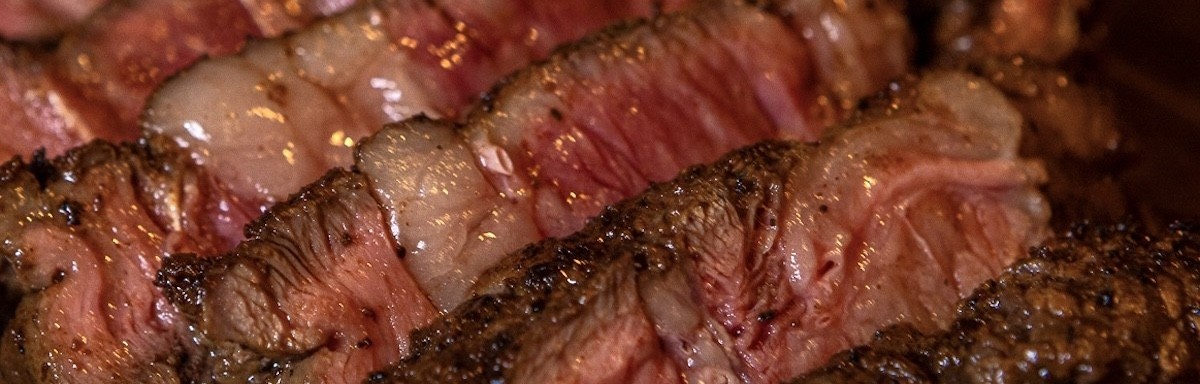
How to cook chuck eye steak in 5 steps
It looks like a ribeye, cooks like a ribeye and costs considerably less: the chuck eye steak. The difference? It doesn't come from the rib, but from the shoulder. Sear the chuck eye in a hot pan for 1 minute per centimetre per side, take it off the heat at 49 to 50 °C and let it rest for 5 to 10 minutes. Slice it across the grain and you've got a steak with a rich, full flavour that nobody will miss a ribeye for.
Chuck eye steak at a glance
- Chuck eye steak comes from the shoulder (the chuck) of the cow, starting at the 5th rib.
- A ribeye comes from the fine rib, between the 6th and 12th rib. According to The Butchery, in America only meat from that section may be sold as ribeye.
- Chuck eye looks a lot like ribeye, but is usually thicker.
- Compared to ribeye, chuck eye is less tender, but has a richer, slightly more intense flavour.
- Chuck eye steak is also called poor man's ribeye. It's another name for the same cut.
- Chuck eye steak has no bone. The bone is removed when it's portioned.
- Chuck eye is considerably cheaper than a ribeye of the same breed.
- Cook chuck eye for 1 minute per centimetre of thickness per side in a hot pan.
- Medium rare is 52 to 54 °C after resting.
- Count on about 250 grams of chuck eye per person for an average eater.
What is chuck eye steak, exactly?
Chuck eye isn't a steak you'll easily find at your local butcher in the Netherlands, precisely because it isn't a standard cut. Look closely at a chuck eye and it looks remarkably like a ribeye. Both have an 'eye' in the steak. But they come from different parts. The ribeye comes from the fine rib, in line with the entrecote. The chuck eye comes from the shoulder, starting at the 5th rib, and is usually thicker than a ribeye.
Is it as tender as a ribeye? No, a bit less. In return, the flavour is richer and slightly more intense. In America you eat ribeye on weekends or special occasions, while chuck eye often makes it to the table on a weekday too. That makes it the ideal weekday steak with a weekend flavour.
Chuck eye or ribeye?
Have you ever cooked a ribeye? Then you already know almost everything. You cook chuck eye the same way. The difference comes down to three things:
- Location. Ribeye comes from the rib, chuck eye from the shoulder.
- Texture. Chuck eye is slightly less tender, but has more bite.
- Price. Chuck eye is considerably cheaper.
If you appreciate a bit more bite, go for chuck eye. If you want the buttery-soft texture, stick with ribeye.
Which breed of chuck eye should you choose?
We carry chuck eye from several breeds. The Black Angus USDA Prime is grain-fed, with lovely marbling and plenty of flavour. Looking for something with more character? Then there's the grass-fed Black Angus from Argentina, a hearty steak with depth of flavour. And for the ultimate experience there's chuck steak from Japanese A5 Wagyu. View all our chuck eye and can't decide? Feel free to call or email us via customer service.
Rules of thumb for the perfect chuck eye
- Take it out of the fridge an hour or two ahead. A steak at room temperature cooks more evenly.
- Pat dry. A dry surface browns better.
- Use a hot pan. High heat gives you a brown crust.
- 1 minute per centimetre per side. That's the rule of thumb. Chuck eye is often thicker than a ribeye, so measure the thickness.
- Measure the core temperature. With a thick steak, that's the only reliable way.
- Slice across the grain. That keeps the steak tender.
How to cook chuck eye steak in 5 steps
- Take the chuck eye out of the fridge an hour or two ahead and pat it dry. That way the steak comes to room temperature, and a dry surface browns better.
- Season with salt and pepper. Or choose a rub you like. Nothing more is needed.
- Sear the chuck eye in a hot pan. Heat a heavy pan over high heat with a splash of oil and count on 1 minute per centimetre of thickness per side. A 3 cm steak gets about 3 minutes per side, until a nice brown crust forms.
- Take it off the heat at 49 to 50 °C and let it rest. If the steak hasn't reached temperature yet, finish it in a 100 °C oven. Then let it rest for 5 to 10 minutes on a board or warm plate.
- Slice and serve. Slice the chuck eye across the grain into slices of about half a centimetre, or serve it whole and carve at the table.
Which core temperature suits chuck eye?
Use a meat thermometer. The temperature keeps rising another 2 to 3 °C while resting, so take the steak off the heat a little earlier. Guideline temperatures after resting:
- Rare: 48 to 50 °C
- Medium rare: 52 to 54 °C
- Medium: 56 to 58 °C
Our tip: go for medium rare. Chuck eye is marbled and can take slightly more doneness than a lean cut, but there's no need to go beyond medium.
Chuck eye in the oven, on the BBQ or sous vide
Chuck eye is flexible. On the BBQ, sear it over direct heat and finish it on the indirect side until the core reaches 49 to 50 °C. In the oven, sear it in the pan first and finish it in a preheated 100 °C oven. Sous vide works too: cook it in a water bath to your desired core temperature, then sear it briefly for a crispy crust.
Marinating chuck eye
Chuck eye has plenty of flavour, so a marinade isn't necessary. Want a little extra anyway? A marinade with olive oil, garlic and rosemary goes well with the hearty meat. Do take the steak out of the marinade and pat it dry before cooking, otherwise you won't get a crust.
Chuck eye steak recipes


Slicing chuck eye: across the grain
Chuck eye has a bit more bite than a ribeye. With a well-cooked steak that's no problem, as long as you slice it across the grain. Let the steak rest first, then slice it into thin slices. That way you don't have to chew on long fibres and the steak stays tender.
What to serve with chuck eye
Chuck eye has a rich, meaty flavour and goes with classic steak companions. Think roasted potatoes, a salad or grilled vegetables. A herb butter or a classic béarnaise sauce goes well too. For wine, go for a full-bodied red with structure, such as a cabernet sauvignon, a sangiovese or a syrah. If you choose a béarnaise sauce, a more mature wine, such as a Rioja Reserva, works best.
Fun facts about chuck eye
- Many names. Chuck eye steak is also called poor man's ribeye, and in America also Delmonico steak or butcher's ribeye.
- Rib or shoulder. A ribeye comes from the 6th to 12th rib, a chuck eye from the 5th rib. So it sits just outside the ribeye area.
- Weekday or weekend. In America, ribeye is weekend food, while chuck eye also makes it to the table on weekdays.
- No bone. Although chuck eye comes from near a rib, the bone is removed when it's portioned. The steak is completely grill-ready.
- Three from the shoulder. Chuck eye, flat iron and petite tender (diamanthaas) all come from the shoulder, but each has its own character.
- Also from Wagyu. Chuck eye is also available from Japanese A5 Wagyu, with a marbling score of BMS 12.
Questions about cooking chuck eye steak
What is chuck eye steak? Chuck eye steak is a steak from the shoulder of the cow, starting at the 5th rib. It looks a lot like a ribeye, but is often thicker, slightly less tender and has a richer flavour.
Is chuck eye steak the same as poor man's ribeye? Yes. Poor man's ribeye is another name for chuck eye steak. The name refers to the lower price, not to the quality.
What is the difference between chuck eye and ribeye? Ribeye comes from the fine rib, chuck eye from the shoulder. Chuck eye is slightly less tender, has a richer flavour and is considerably cheaper.
Does chuck eye steak have a bone? No. The bone is removed when it's portioned and the steak is free of membranes, so you can put it straight into the pan.
How long do you cook chuck eye? Count on 1 minute per centimetre of thickness per side in a hot pan. A 3 cm steak is therefore about 3 minutes per side. Go by core temperature: take it off the heat at 49 to 50 °C for a medium rare steak after resting.
What is the core temperature of chuck eye? Medium rare is 52 to 54 °C after resting. Take the steak off the heat about 3 °C earlier. There's no need to go beyond medium (56 to 58 °C).
How much chuck eye do you need per person? As a main course, count on about 250 grams for an average eater and 250 to 400 grams for a big eater. To share between two, 400 to 500 grams is enough.
Can you cook chuck eye on the BBQ? Absolutely. Sear it over direct heat and finish it on the indirect side until the core reaches 49 to 50 °C.
Which wine goes with chuck eye? A full-bodied red wine with structure, such as a cabernet sauvignon, sangiovese or syrah. With béarnaise sauce, a more mature wine such as a Rioja Reserva works best.