







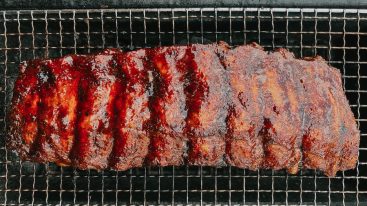
What are spareribs, actually?
Spareribs are perhaps the most iconic cut of barbecue meat in the world. Not only a huge hit in the Netherlands, but also in BBQ countries par excellence such as the US and Australia. Ribs used to be wrongly regarded as a 'by-product', but fortunately at The Butchery we know better.
Why the bone is essential:
The bone is not a drawback, but a big advantage! It conducts heat for even cooking and releases a lot of flavour into the meat during the process. The result? That characteristic, deep meaty flavour BBQ lovers are so crazy about. Looking for ribs with extra flavour and that characteristic nutty aroma? Then try our Ibérico spareribs.
The secret of a top sparerib
Not every rib is the same. You recognise a truly good sparerib by the balance between meat and fat. Especially with premium breeds such as Ibérico or Livar, the intramuscular fat (the marbling) plays a leading role. This fat melts during cooking and keeps the meat juicy, even after hours on the BBQ.
The quality of the breed and the fat structure ultimately determine whether a rib turns out dry or falls off the bone butter-soft. In our article on the quality characteristics of spareribs you can read exactly what to look out for, so you always bring home top quality.
Baby Back or St. Louis Style?
'Spareribs' is a collective term, but there is a big difference in what you put on your grill. In the Netherlands we are used to so-called loin ribs (baby backs), but the real American BBQ experience comes with belly ribs.
- Baby Back Ribs (loin ribs): The standard in the Netherlands. They come from the back, are somewhat rounder, smaller and usually a bit leaner.
- St. Louis Style (belly ribs): The large, flat ribs known from American BBQ shows. These are bigger, fattier, meatier and call for a different cooking time.
It would be a shame to use the wrong technique on the wrong rib. Below you can see the most important differences at a glance:
Baby Back vs St. Louis Style - Quick Overview
| Characteristic | Baby Back Ribs | St. Louis Style |
| Origin | Back (loin ribs) | Belly |
| Weight | 600-1000 grams | 1300-1500 grams |
| Cooking time (110°C) | 3-4 hours | 5-6 hours |
| Fat content | Lean to average | High (more marbling) |
| Flavour | Mild and refined | Full and robust |
| Texture | Tender / 'Fall off the bone' | Juicy with a 'bite' |
Still not sure which variety best suits your BBQ plans? Then take a look at our complete comparison of Baby Back and St. Louis ribs.
Preparation & tips
The art of low & slow
We advise against pre-boiling spareribs; you lose flavour and texture. A real shame! Spareribs call for an authentic Low & Slow preparation on the barbecue. The holy grail for many BBQ fans is the 3-2-1 method. Here you cook the ribs in three phases (smoking, wrapping, glazing) for a result so tender it almost falls off the bone.
Smoking wood and the perfect smoke ring
Besides a good rub and sauce, smoke is the secret ingredient. Smoking wood gives that authentic BBQ flavour. But be careful: too much smoke makes the meat bitter.
Get it right and you will be rewarded with the 'Smoke Ring': that pink edge just under the bark. This is pure chemistry and a sign of craftsmanship! Want to get started with this technique yourself? We explain how to create that perfect smoke ring and which smoking wood for spareribs gives the best flavour combination.
Recipes & inspiration
Looking for something other than the standard marinade? Because we work with flavourful breeds such as Ibérico and Livar, you can vary endlessly. Below you will find four of our favourite recipes:
- Indonesian-style spareribs
- Spicy Ribs with Honey & Butter Glaze
- Asian-style Ibérico Spareribs
- St. Louis Style Ribs with Truffle Butter
Need even more inspiration? View all our sparerib recipes here >
Order online & flash-frozen delivery
Ordering meat online is a matter of trust. At The Butchery, we take that seriously. All our spareribs are professionally trimmed, vacuum-packed and flash-frozen within the hour at -40 °C.
Why flash-freezing?
- No cell damage: Slow freezing creates ice crystals that make meat tough. With our flash-frozen technique, the cell structure stays intact.
- Fresher than fresh: After thawing, the meat is fresher than meat that has been lying in the supermarket for days.
We deliver throughout the Netherlands and Belgium.
Frequently asked questions about spareribs
How many grams of spareribs per person?
Because part of the weight is bone, you allow an average of 500 to 650 grams per person. For big eaters we recommend 750 grams.
Should I pre-boil spareribs?
No, we advise against pre-boiling. For the best spareribs, cook them low & slow on the BBQ or in the oven at 100 to 120 degrees Celsius.
What is the 3-2-1 method for spareribs?
The 3-2-1 method consists of three phases: 3 hours of smoking, 2 hours of wrapping and 1 hour of glazing with sauce. This method works particularly well with St. Louis Style ribs and guarantees tender results.
Can I also cook spareribs in the oven or slow cooker?
Yes, as long as you cook them slowly at a low temperature (100-120°C). The low & slow principle stays the same, you just miss the authentic smoky flavour.
What is the difference between belly ribs and spareribs?
In everyday speech, spareribs usually means baby back ribs. Belly ribs are St. Louis Style ribs, which are larger, flatter and fattier. Discover in our blog which type of rib best suits your taste.
Which smoking wood should I use for spareribs?
For spareribs, fruity woods such as cherry or apple go well with sweet BBQ flavours. Pecan wood is also recommended for its nutty flavour. Want a stronger smoky aroma? Then choose hickory or oak. Read all about choosing the right smoking wood.
How do I reheat spareribs?
Reheat spareribs in the oven at 160°C for 15 to 20 minutes. Cover them with foil to prevent them from drying out. You can also briefly reheat them on the BBQ, but the oven is the quickest and easiest.
How long can I keep spareribs?
Store thawed spareribs refrigerated according to the storage instructions on the packaging. Once opened, we recommend cooking them within 24 hours. In the freezer, they keep for months.