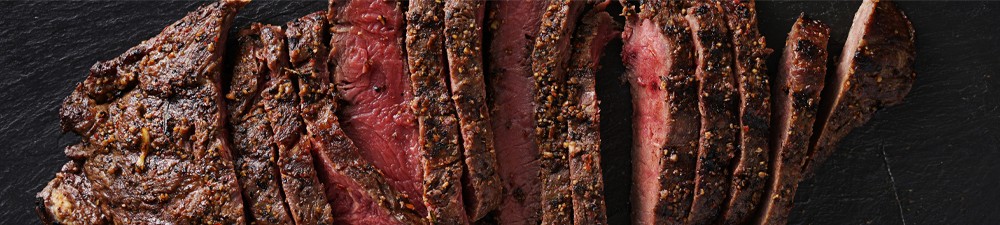
What is flat iron steak?
Flat iron steak – also known as top blade steak, butler's steak, or oyster blade steak – is cut from the top blade of the chuck (shoulder) of the animal. The name comes from its flat, rectangular shape that resembles an old-fashioned clothes iron. The steak is never thicker than about 3 centimetres.
Chuck without the sinew
The top blade consists of two muscles separated by a thick sinew. In a regular chuck steak that sinew is left in, which is fine for braising but not for grilling. For a flat iron steak, the top blade is split and the sinew removed. What remains are two beautifully marbled steaks with all the flavour and tenderness of the chuck, but without the tough sinew.
How was flat iron steak discovered?
The flat iron steak was officially 'discovered' in 2001 thanks to research by the National Cattlemen's Beef Association in the US. Researchers concluded that the infraspinatus muscle – the flat iron – is the second most tender muscle on the entire animal, after the tenderloin. Since then, this steak has become a staple of the American BBQ scene and is gaining serious popularity worldwide.
How we prepare a flat iron steak for you
Cutting a flat iron steak is not something you just do. It takes precision and skill. Here's how we do it:
- The meat is first wet-aged for maximum tenderness.
- One of our master butchers then performs a strict quality check on smell, colour, and texture. Only if everything passes do we turn it into steaks.
- All membranes are removed from the outside so the top blade is clean.
- Then comes the split. The butcher locates the exact position of the sinew and trims the top side of the meat away from it.
- The sinew is then cut free from the underside.
- Finally, all uneven edges are trimmed until you have a beautiful, uniform steak. It is then portioned to the desired weight if needed.
Immediately after trimming, every steak is individually vacuum-sealed and flash-frozen at -40°C within the hour. This gives you a steak that is 100% grill-ready, frozen at the exact peak of tenderness. And thanks to our weight guarantee, you only pay for the meat you actually eat.
What does flat iron steak taste like?
Flat iron steak has a full, rich beef flavour. It is more intense than tenderloin and somewhat comparable to ribeye. That's because the top blade is a heavily worked muscle. Muscles that work harder have more blood flow running through them, and you can taste it. More flavour, more character.
With a quality breed, that's complemented by beautiful fat marbling. Those fine threads of fat melt through the meat as it cooks, adding even more flavour and juiciness.
Flat iron steak vs. other steaks
Not everyone knows flat iron, so we understand it can be hard to decide if this is the steak for you. Here's how it compares to more familiar cuts.
Flat iron vs. Ribeye
These two steaks are close in flavour. Both are well-marbled with an intense taste. The ribeye is thicker and retains more fat during cooking. Flat iron is also considerably cheaper than ribeye.
Flat iron vs. Tenderloin
Tenderloin is the most tender cut on the animal; flat iron comes right after it. Flat iron has significantly more intramuscular fat, which means more flavour. Tenderloin, like ribeye, comes at a higher price.
Flat iron vs. Bavette
Bavette is a bolder cut. It has a coarser grain and a bit more chew, but rewards you with enormous flavour. Flat iron is considerably more tender, though the flavour difference is smaller than you might expect. Flat iron is also easier to cook, as it stays tender even if you take it a touch further than planned.
Flat iron vs. Sirloin
Sirloin is thicker, has a distinctive fat cap, and a firmer bite. Flat iron is more compact, more tender, and has a more intense flavour. For those who prefer less fat but still want plenty of taste, flat iron is the smart choice.
Which breed of flat iron steak is right for you?
Not all flat iron steaks are created equal. The breed makes a world of difference in flavour, tenderness, and marbling.
Butcher Harold's favourite: Black Angus USA (USDA Prime)
Ask our butcher Harold about his favourite steak and he doesn't need long to think: a flat iron from Black Angus USDA Prime. The Prime-grade marbling makes it butter-tender with enormous flavour. Only around 3% of all American beef achieves the Prime grade. At The Butchery you never get USDA Choice – always Prime. The difference between the two is significant. And the value compared to other premium steaks? Frankly, it's absurdly good. You get Prime quality for a fraction of what you'd pay for ribeye or tenderloin.
Wagyu
For the ultimate experience, go for our Wagyu flat iron. We stock Australian Wagyu with an impressive BMS 8+ score. With Wagyu, everything revolves around intramuscular fat marbling, measured internationally by the Beef Marbling System (BMS). This extreme marbling creates an almost melt-in-the-mouth texture and a rich, luxurious flavour. A special-occasion cut – or for whenever you simply want to treat yourself.
Not sure which breed suits you? Feel free to get in touch – our butchers are happy to help.
How to cook flat iron steak
Flat iron steak is fairly forgiving. Its even thickness means it cooks consistently throughout. With a few basic principles, you can put a steakhouse-worthy steak on the table.
Pan-frying
- Take the steak out of the fridge at least 2 hours before cooking. Pat dry with kitchen paper.
- Season generously with coarse sea salt.
- Heat a pan over high heat with a splash of oil and a knob of butter.
- Turn the steak every 20–30 seconds for an even crust. That crust is key to the Maillard reaction – in short, it's what gives your steak its extra depth of flavour.
- Cook to an internal temperature of 50–52°C (medium rare). Always use a meat thermometer.
- Rest for 5–10 minutes. The internal temperature will rise another 2 degrees.
- Slice against the grain into half-centimetre pieces. Finish with freshly ground pepper and a pinch of flaky sea salt.
On the BBQ
Flat iron and the BBQ are a dream combination. Heat your BBQ to around 250°C and grill the steak 2–3 minutes per side over direct heat. For an impressive presentation, rotate the steak 90 degrees halfway through each side for beautiful grill marks. Then rest for 8 minutes under aluminium foil. The internal temperature will carry over to around 52–54°C. Season with coarse sea salt and freshly ground pepper after resting. That's all you need.
Sous-vide
Cook for 2 hours at 54°C in a water bath. Our vacuum packaging is heat-resistant, so the steak can go straight into the water in its packaging. Rest for 5 minutes, then pat dry thoroughly. Sear all over for a good crust, then rest for another 5 minutes before slicing.
Flat iron steak internal temperature
Getting the temperature right makes or breaks your steak. In our opinion, flat iron is at its best at medium rare. Always use a meat thermometer and keep in mind that the temperature will rise another 2–3 degrees while resting.
- Rare: 50–52°C
- Medium rare: 52–54°C
- Medium: 55–58°C
- Medium well: 59–63°C
- Well done: 65°C+
What weight should you choose?
Flat iron is best cooked whole. Use the weights below as a guide per person.
As a main course
Regular appetite: 175–200g
Big eater: 250–400g
Carnivore: 400g+
To share for 2
Regular appetite: 400g
Big eater: 500g+
Carnivore: No Share
BBQ with multiple meats [shared]
Light eater: 75g
Big eater: 150g
Carnivore: 200g
Flat iron steak recipes
Ready to get cooking? Our BBQ specialist Siebe Grijpma from BBQ Moods has put together two recipes that show exactly what you can do with flat iron steak:
- Flat iron steak on the BBQ – The classic. Grilled hot and fast, seasoned with nothing but coarse sea salt and pepper, then served with a fresh lamb's lettuce salad, toasted pine nuts, and a honey-mustard dressing.
- Surf & Turf: flat iron with grilled prawns. Land and sea on one plate. A flat iron steak paired with spicy marinated prawns off the grill. Not difficult to make, but it never fails to impress.
Order flat iron steak from The Butchery
At The Butchery you can choose from steaks of various breeds and weights. Every piece hand-split and triple trimmed by our master butchers, then vacuum-sealed and flash-frozen at -40°C within the hour.
Order on a weekday before 11:00? We deliver across the Netherlands and Belgium the same evening, deep-frozen via refrigerated transport or with dry ice.
Want to know more about how we work? Read all about our craft.
Frequently asked questions about flat iron steak
Is flat iron steak the same as chuck steak?
Flat iron steak is cut from the top blade (chuck), but it's not the same thing. A regular chuck steak still contains the thick sinew and is usually braised low and slow. For a flat iron, that sinew is removed and the top blade is split into two tender steaks. These are meant to be grilled or pan-fried quickly, not simmered for hours.
Why is it called flat iron steak?
The name comes from its flat, rectangular shape, which resembles an old-fashioned clothes iron. The steak is always flat and never thicker than about 3 centimetres.
Can I marinate flat iron steak?
You can, but you don't need to. The meat already has so much natural flavour that salt and pepper are really all it needs. If you do want to marinate, keep it simple – something that complements rather than overpowers the beef. A mix of olive oil, garlic, thyme, and a squeeze of lemon works well. Marinate for no more than 4–6 hours in the fridge.
Is flat iron steak good on the BBQ?
Absolutely – it's one of the best steaks for the BBQ. Its even thickness means it cooks consistently, and the marbling keeps it from drying out.
How long does flat iron steak keep?
Our flash-frozen flat iron steak keeps in the freezer for at least 6 months. Once thawed in the fridge, the meat can be kept for another 4–7 days. For the best result, always thaw slowly in the fridge.
What is the difference between flat iron and chuck eye steak?
Both come from the shoulder, but they are different muscles. The chuck eye sits closer to the ribeye and has a rounder shape. The flat iron is flatter, more finely marbled, and slightly more tender.
How much does flat iron steak cost?
It's one of the most affordable premium steaks you can buy. You get flavour and tenderness comparable to ribeye and sirloin, but at a sharper price. The exact price varies by breed, but thanks to our triple-trim process you only pay for the meat you actually eat.
How much flat iron steak per person?
As a main course, count on 175–250g per person. For a BBQ with multiple meats, 75–150g per person is plenty.