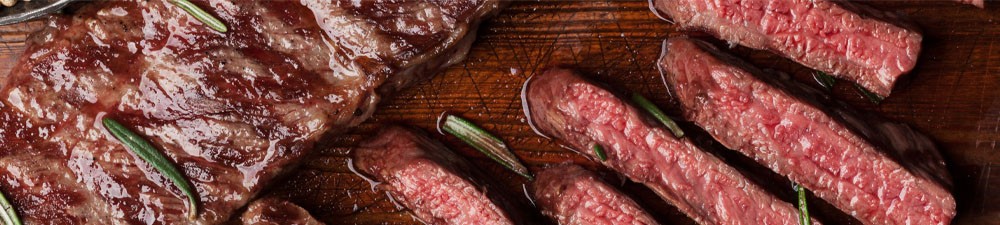
The steak America "invented"
While cuts like the ribeye and sirloin have existed for centuries, the denver steak is relatively new. It was officially introduced in 2008 by the National Cattlemen's Beef Association (NCBA) as part of a research programme looking for undervalued muscles with serious potential. That research identified the serratus ventralis — a muscle sitting just beneath the shoulder blade — which, against all expectations, turned out to be the fourth most tender muscle on the entire animal. Only the tenderloin, flat iron steak, and the ribeye cap rank above it.
Turning this muscle into a recognisable product was a matter of branding. The name "Denver" has no meaningful connection to the city — it's most likely a nod to Colorado, where the NCBA is headquartered. It could just as easily have been called the "Boulder steak" or the "Rocky steak." What mattered was that this cut, which had previously disappeared into mince or stewing beef, finally got a name, a story, and a place in the butcher's case.
Interestingly, the same muscle had long been appreciated in Japan and American fine dining under the name Zabuton, meaning literally "sitting cushion" — a reference to its thick, square shape. The Americans didn't so much discover a new steak as put it on the map.
What makes a denver steak special
The reason the denver steak is so tender is because it's hidden away. The serratus ventralis sits directly beneath the shoulder blade, protected by that bone from the constant movement that the rest of the shoulder (the "chuck") endures. Less work means less connective tissue, and less connective tissue means a steak that's already tender after a short cook — even while the surrounding meat is better suited to low and slow.
That protected position has another effect: the muscle develops an even fat marbling running right through the grain. This is unusual for shoulder beef, where fat typically runs through in larger channels or collects on the outside. In the denver steak, that marbling melts from the inside out during cooking — comparable to what happens in a ribeye, but more compact and slightly quieter in flavour.
Denver steak, zabuton, chuck under blade: the same cut, different names
Because this cut comes from multiple culinary traditions, it goes by several names. A quick overview:
- Denver steak — the American marketing name (2008, NCBA)
- Zabuton — the Japanese name; literally "sitting cushion"
- Chuck under blade or underblade filet — the butcher's term (the cut beneath the shoulder blade)
- Chuck flap tail — an American variation of that butcher's term
There is no established English translation that has truly stuck. You'll occasionally see it listed as "shoulder steak," but that term is so broad it creates more confusion than clarity. We keep it simple: denver steak.
Denver steak compared to other cuts
Below is a comparison between the denver steak and other premium cuts — useful if you're still deciding.
Against a ribeye
The denver steak comes very close in both tenderness and flavour. A ribeye generally has more intramuscular fat — the characteristic "eye" — and a richer mouthfeel. The denver is more compact, with finer marbling and a slightly more restrained flavour profile, but at a considerably lower price. For anyone wanting to try a premium shoulder cut for the first time, this is our obvious recommendation.
Against a flat iron steak
Both cuts come from the chuck, were "discovered" by the NCBA, and are surprisingly tender. The difference lies in the muscle: the flat iron comes from the infraspinatus (above the shoulder blade) and is flat and rectangular. The denver comes from below the shoulder blade and is thicker and squarer. Flavour-wise, the denver is slightly fuller due to its finer fat distribution; the flat iron is a touch more subtle.
Against a bavette or flank steak
Here the contrast is more pronounced. The bavette has a coarser grain, is flat, and is unmistakably a working muscle. The denver has a finer structure, is more tender, and requires less attention when slicing. If you're after the bite of a working muscle, you're better off with the flank steak or bavette.
How our Master Butchers prepare your denver steak
With the denver steak, craftsmanship comes down to a few very specific steps. It's a compact muscle nestled between larger muscle groups, and this cut lives or dies by how precisely it's extracted from the shoulder. Cut in the wrong plane or leave any silverskin behind, and you end up with a steak that curls in the pan or holds tough edges you can't cut through.
Every denver that comes through our doors is first assessed for smell, colour, and marbling. Only after approval do we remove the silverskin from the top and trim any irregular edges. The result is a steak that cooks evenly throughout and comes out of the packaging grill-ready. This all happens as part of our triple trim process, which we apply to every steak we cut.
Immediately after portioning, each steak is vacuum-sealed and flash-frozen at -40°C, locking in its quality at the optimal moment.
You can read the full story on our craftsmanship page.
Which denver steak is right for you?
Choosing between breeds for a denver steak can be tricky. We've laid out both options from our range below so you can easily find the one that suits you.
Black Angus USA (USDA Prime) is our bestseller and the logical starting point. USDA Prime represents the top 3% of all American beef based on marbling and age. The cattle are raised without hormones according to NHTC guidelines and fed a diet of grass, corn, and grains. On a denver steak, that grading really comes into its own — you get a steak with tremendous flavour and a great bite. More about Black Angus USA.
Wagyu is where things get interesting for those who really want to push the boat out. The extreme fat marbling of Wagyu starts to melt at body temperature, because the intramuscular fat has a lower melting point than regular beef fat. On an already tender cut like the denver, that delivers an almost melt-in-the-mouth experience. The meat takes on an umami depth you won't find in other cuts in quite the same way. More about Wagyu.
Still unsure? Get in touch — our butchers are happy to advise.
How to cook a denver steak
A denver steak is cooked hot and fast. There's no need to braise it for hours like other shoulder cuts with more connective tissue. Below are the four most popular methods.
Denver steak in the pan
The denver steak is usually 2 to 4 centimetres thick and cooks relatively quickly. A cast iron pan works best, as it retains heat and delivers a great crust.
- Take the denver out of the fridge 30 to 60 minutes before cooking. Putting cold meat straight into a hot pan leads to uneven cooking.
- Pat the steak dry and rub with coarse sea salt. Add pepper only after cooking — at high heat it burns and turns bitter.
- Heat the pan over high heat with a splash of oil.
- Place the steak in the pan once the oil just begins to smoke. Cook for 1 minute per centimetre of thickness per side for medium-rare.
- Flip once and repeat on the other side.
- In the final minute, reduce the heat slightly and add a knob of butter, a crushed clove of garlic, and a sprig of thyme. Continuously spoon the butter over the meat (basting).
- Remove the steak from the pan at an internal temperature of 50°C. It will carry over to 52–54°C while resting.
- Rest for 5 to 10 minutes loosely covered with foil, then slice against the grain.
Denver steak on the BBQ
The marbling of the denver steak really shines with high, direct heat. No pan can match the smoke flavour and crust you get from a scorching hot grate.
- Heat your BBQ or kamado to 230–250°C with direct fire.
- Place the denver on the hot grate. Grill 2 to 3 minutes per side, depending on thickness.
- Want defined grill marks? Rotate the steak a quarter turn halfway through each side.
- Remove from the grate at an internal temperature of 50°C.
- Rest for 5 to 10 minutes under foil. Slice against the grain.
Denver steak sous-vide
With a thinner cut like the denver, sous-vide has one major advantage: it's virtually impossible to overcook the steak. Follow these steps:
- Set the water bath to 54°C (medium-rare) or 56°C (medium).
- Place the steak in the bath. You can leave it in our vacuum packaging — it's heat-resistant up to 70°C.
- Cook for 2 to 4 hours. Longer is possible, but adds little for this cut.
- After the water bath, pat the steak dry with kitchen paper. This is crucial for the crust.
- Sear for a maximum of 1 minute per side in a hot pan or over direct fire on the BBQ.
- Rest for 5 minutes and slice against the grain.
Denver steak in the oven
For a thicker steak or multiple steaks at once, the oven via reverse sear works excellently.
- Preheat the oven to 120°C.
- First sear the steak briefly on all sides in a hot pan.
- Place it on a rack in the oven (with a tray underneath) and cook to an internal temperature of 50°C (about 15 minutes for a 3 cm steak).
- Rest for 5 to 10 minutes before slicing.
Internal temperature for denver steak
The denver is relatively thin and cooks through quickly, so a meat thermometer is genuinely recommended here. Use the following temperatures as your guide:
- Rare: 49–51°C
- Medium-rare: 52–54°C (our recommendation)
- Medium: 55–57°C
- Well done: 62°C+ (not our advice — but it's your steak)
Due to carryover cooking, the internal temperature will rise a further 2 to 3 degrees while resting. Pull your steak off the heat a little earlier than you think.
How much denver steak per person?
Our denver steaks are individually portioned at weights between 200 and 500 grams, making one steak per person a neat fit.
As a main course
- Average appetite: 200–250 grams
- Large appetite: 300–400 grams
- Carnivore: 400–500 grams
BBQ with multiple meats (sharing)
- Average appetite: 75–100 grams
- Large appetite: 150 grams
- Carnivore: 200 grams
Marinating: when to and when not to
With a well-marbled denver from Black Angus or Wagyu, salt and pepper is honestly all you need. The fine fat distribution and rich beef flavour don't require much assistance. That said, the denver takes well to marinades, so there's plenty of room to experiment.
A few combinations that work well:
- Chimichurri-style — parsley, oregano, garlic, red wine vinegar, olive oil. Classic South American.
- Honey-garlic — olive oil, soy sauce, honey, Dijon mustard, garlic, thyme. An American BBQ classic.
- Asian — soy sauce, sesame oil, ginger, garlic, rice vinegar. Works great for denver cubes on skewers.
Marinate for at least one hour, and no more than 8 hours in the fridge. With an acidic marinade (high in citrus or vinegar), keep it to 2 to 3 hours — any longer and the fibres break down too far, turning the texture mushy.
Recipes with denver steak
Find all our steak recipes on our recipes page.
Order denver steak from The Butchery
Denver steak is rarely found at a regular butcher, simply because demand hasn't been there until recently. Online it's much more accessible. At The Butchery you can choose from different breeds and weights. We ensure your order is frozen to -40°C within an hour of trimming and arrives at your door still frozen.
Order on a weekday before 11:00 and you'll receive your order that same evening across the Netherlands and Belgium. We work with two couriers: Chill Bill for chilled daytime delivery, and Trunkrs for evening delivery with dry ice. On arrival the steak can go straight back in the freezer, or you can thaw it in the fridge overnight before cooking.
Prefer to come in? Our Flagship Store in Meppel has butchers ready to help in person.
Frequently asked questions about denver steak
Where does denver steak come from?
Denver steak is cut from the serratus ventralis, a muscle located just beneath the shoulder blade in the chuck (shoulder) of the animal. There are two per carcass. The cut was introduced in 2008 by the American National Cattlemen's Beef Association as part of a study into undervalued muscles.
Is denver steak the same as zabuton?
Yes. Zabuton is the Japanese name for the same muscle. The word means "sitting cushion" and refers to the thick, square shape of the steak. In the American butchery world it's also known by the anatomical names chuck under blade or underblade filet.
Is denver steak tough?
No — quite the opposite. According to NCBA research, the denver is the fourth most tender muscle on the entire animal, ranking above even the ribeye. The key conditions: don't cook it beyond medium, and always slice against the grain.
How do you cook a denver steak in the pan?
Bring the steak to room temperature, pat it dry, and season with coarse sea salt. Heat a cast iron pan with oil over high heat. Cook for 1 minute per centimetre of thickness per side. Add butter, garlic, and thyme in the final minute and baste. Remove at 50°C and rest for 5 to 10 minutes. More tips in our article on slicing steak.
Internal temperature: which degrees?
Medium-rare (our recommendation): 52–54°C. Medium: 55–57°C. Pull the steak 2 to 3 degrees early — carryover cooking does the rest.
Denver steak or ribeye: which is better?
It comes down to preference and budget. The ribeye has more intramuscular fat and a richer, more indulgent mouthfeel. The denver is slightly more compact and restrained in flavour, but the two are closely matched for tenderness. The bigger difference: the denver is considerably more affordable. For anyone after premium steak flavour without the ribeye price tag, the denver is the smart choice.
Can you cook denver steak on a Big Green Egg?
Absolutely. A kamado like the Big Green Egg is ideal — you can crank it up to 230–250°C for a quick, fierce sear. For a thicker denver, reverse sear works well: first cook indirectly at 120°C to a core of 45°C, then sear hot and fast to 50°C.
How much does a denver steak cost?
The price per kilo varies by breed. Black Angus USDA Prime is our bestseller and more accessible in price than Wagyu. Because our denver steaks are triple trimmed, you pay only for the meat that ends up on your plate — no excess fat, no moisture, no packaging weight.
Why is it called a "denver" steak?
Marketing. The name was chosen by the NCBA in 2008 because the cut needed a recognisable label. There's no meaningful connection to the city of Denver — it most likely references Colorado, where the NCBA has its headquarters.
How do I thaw a denver steak?
The safest method with the best results is to thaw it in the fridge overnight before cooking. In a hurry? Place the steak in its vacuum packaging in a bowl of cold water — it'll be ready within 1 to 2 hours. Never thaw at room temperature or in the microwave.
How long does flash-frozen denver steak keep?
At least 6 months in the freezer without any loss of quality, thanks to flash-freezing at -40°C and our 4-layer vacuum packaging. The exact best-before date is printed on every pack.