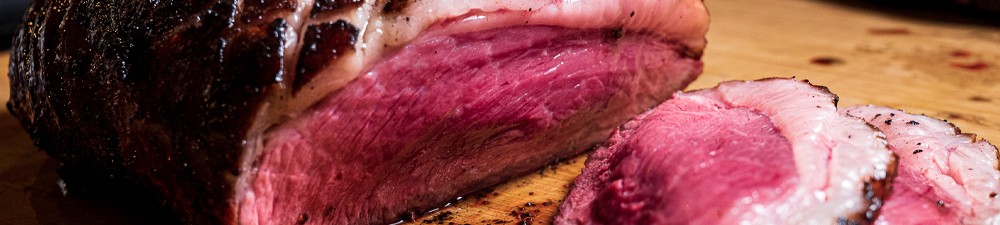
The Brazilian queen of steaks
Ask a Brazilian which piece of meat belongs on the churrasco and the answer is always the same: picanha. In Brazil, this is absolutely the most coveted piece of beef, with a sacred status comparable to that of the tournedos in Europe. It is also an undisputed favorite on the grill in neighboring South American countries. The difference from beef tenderloin? Picanha has much more flavor. That is, of course, due to that characteristic fat cap.
Owner and master butcher Bert-Jan Lantinga spent a year in Brazil and got to know the gaucho culture from the inside out. "In Brazil, I saw how a simple piece of meat with coarse salt and a wood fire turned into something so special. That honesty in preparation is exactly what I wanted to bring to The Butchery." That experience is one of the reasons picanha has a permanent spot in our range.
What exactly is picanha?
In the Netherlands, picanha is also known as the 'staartstuk' (rump cap). This is a triangular piece of beef on the outside of the silverside, just below the tail. Because this extension of the flat rib moves relatively little, the meat is naturally tender and fine-grained. Only two pieces can be cut per cow.
What distinguishes picanha from almost any other steak is the fat cap. On top of the picanha is a thick layer of fat that protects the meat from drying out during preparation. That fat melts slowly and renders through the meat, giving picanha that characteristic full flavor you won't find anywhere else. The tip of the picanha is the most tender part, while the wider side — where the meat is cut from the silverside — is slightly firmer and has a slightly different grain.
The word 'picanha' is Portuguese and presumably derived from the 'picana': the goad with which cattle farmers tapped the cows on the hindquarters, exactly the spot where this piece of meat is located. The Brazilian gauchos (the cowboys of the south) perfected its preparation on large charcoal grills. That tradition is called churrasco and is still the gold standard for picanha today.
How we prepare a picanha for you
With picanha, the fat cap is sacred; we therefore deliberately leave it on. It is the flavor enhancer and the protective layer of the meat. Trimming picanha is all about the perfect balance: you want enough fat for flavor and protection, but you don't want it to be overwhelming.
Specifically, this means the following for us:
We check every picanha upon arrival for quality and maturity. The silver skin on the meat side is completely removed. We trim the fat cap back neatly to exactly the right thickness: we leave enough fat for flavor and protection, but the excess fat is removed. Finally, we trim the hard edges for a uniform shape, so the meat cooks evenly everywhere.
"With picanha, you have to know when to stop trimming," says Bert-Jan. "If you remove too much fat, the meat dries out. If you leave too much, you get a rubbery layer that doesn't crisp up nicely. We trim the fat cap to the thickness I personally enjoy — and by now, I know exactly where that point lies."
After trimming, each picanha is individually weighed and vacuum-packed. With us, you only pay for the meat and not for moisture, packaging, or trimmings. Immediately after, it is frozen in our flash-freezer at -40°C, exactly at the moment when tenderness is optimal.
You can read more about our process on the page about our craft.
Which type of picanha suits you?
With picanha, the characteristic fat cap naturally provides an incredible amount of flavor and juiciness. Yet, the breed of cattle makes a world of difference. A grass-fed Argentine version has a pure beef flavor, while the extreme marbling of a Wagyu picanha melts from the inside out and ensures a buttery-soft mouthfeel.
Black Angus USA – the all-rounder
Our USDA Prime Black Angus picanha is where most customers start. And stay. The marbling is excellent, the flavor is full but not overpowering, and the meat is consistent in quality. The USDA Prime grading guarantees you are in the top 3% of all American beef. A guaranteed hit for any group.
Argentine Black Angus – the pure beef flavor
The picanha from these grass-fed cattle comes directly from the vast Argentine pampas. Here, the animals live in total freedom and feed exclusively on grass and wild herbs. No grains and no stables, but a stress-free life in nature. This pasture-raised lifestyle ensures honest and characterful meat with a natural beef flavor.
Wagyu – for the special occasion
Normally, a picanha has a nice bite. After all, it is a working muscle at the back of the cow. But with a Wagyu picanha, different rules apply. The large amount of intramuscular fat melts through the meat from the inside out during preparation, making even this working muscle buttery soft. The combination of that intense marbling and the fat cap results in an incredible steak. At The Butchery, we have both Australian Wagyu and Japanese A5 BMS 12. Need inspiration? View our recipe for reverse sear picanha steaks from Wagyu A5.
Feel free to contact us if you are unsure about the breed. Our butchers are happy to advise you based on the occasion and your budget.
Picanha on the BBQ
If there is one piece of meat made for the barbecue, it is picanha. The fat cap acts as a natural shield against the heat and bastes the meat from within. The result is a steak that is crispy on the outside and juicy all the way through on the inside.
Tip before you start: Remove your picanha from the refrigerator an hour in advance so it can reach room temperature. Just before preparation, score the fat cap crosswise (without cutting into the meat) and rub generously with coarse sea salt. This helps the flavor penetrate better and prevents the meat from curling on the grill.
Whole picanha — reverse sear
- Set up your BBQ for indirect grilling at approximately 130°C.
- Place the picanha fat-side up and let it cook slowly until it reaches a core temperature of 45-48°C. For a picanha of ±1200 grams, this takes about an hour.
- Then briefly sear it all around over direct fire until a core temperature of 52°C for medium rare.
- Let the meat rest for at least another 10 minutes under aluminum foil.
Picanha steaks — direct grilling
- Before grilling, cut the picanha into steaks 2-3 centimeters thick, with a piece of fat cap on each steak.
- Grill over direct fire at 200-230°C for 2-3 minutes per side. Maintain a core temperature of 52°C for medium rare.
- Let the steak rest for at least 5 minutes.
Brazilians always bend the steaks into a C-shape on a skewer, but it works just as well as a steak on a grill.
Read more about specific BBQ methods in our recipes for picanha smoked on the BBQ and picanha churrasco for those who want to do things a bit differently.
Other ways to prepare picanha
Although the BBQ is the classic method, you can also prepare picanha excellently in other ways. Below are the main alternatives:
In the oven
- Preheat the oven to 120°C.
- First, sear the picanha all around until it has a beautiful golden-brown crust. Start in a cold pan with the fat side down. By searing it in a cold pan, the fat melts away nicely, so you fry it in its own fat.
- Once the meat has a nice crust, place it in an oven dish in the oven and cook it until a core of approximately 52°C for a medium-rare finish.
- Let the meat rest for 10 minutes under loose aluminum foil.
Sous-vide
- Set the sous-vide stick to 52°C (rare), 54°C (medium rare), or 56°C (medium).
- Let the meat cook for three hours in our vacuum foil. This is heat-resistant up to 70°C, so the picanha can go directly into the water bath in its packaging.
- Then briefly grill the outside for a crispy exterior.
In the pan
- Place the picanha fat-side down in a cold pan over high heat. You don't need to add oil, as the fat melts slowly, so you fry it in its own fat.
- Fry the picanha until it is nicely browned all around.
- Turn the heat down slightly and add some butter, rosemary, and thyme. Constantly spoon this over the picanha until it reaches the desired core temperature.
- Let the meat rest for 10 minutes under loose aluminum foil.
Recipes with picanha
With picanha, you can go in any direction — from a classic churrasco to a surprising tartare. Get inspired by our favorite recipes:
Picanha core temperature
The use of a core thermometer is not a luxury but a necessity with picanha. Because of the fat layer, it is difficult to judge by feel how done the meat is. Use the following core temperatures:
- Rare: 46-50°C
- Medium rare: 51-54°C
- Medium: 55-58°C
- Well done: 60°C+ — not our advice, but it's your steak
The core temperature rises by another 2-3 degrees after cooking. So remove the picanha from the heat earlier than you think.
Cutting picanha
Before you start, look very closely at the grain of the meat. In a picanha, these do not run straight but in a kind of fan shape. To get the meat tender, you must always cut perpendicular to this grain.
Start at the narrow tip and turn your knife slightly with each slice, so that you always keep cutting across the grain. At the tip, cut slightly thicker slices; this part is naturally very tender. As you reach the wide side, where the meat is slightly firmer, cut the slices slightly thinner.
How much picanha do you need?
The fat cap partly melts away during preparation, so calculate more generously than with a lean cut like a tournedos.
Picanha as a main course
Average eater: 250-300 grams
Big eater: 350-400 grams
Hardcore carnivore: 400+ grams
Picanha to share
Average eater: 400-600 grams
Big eater: 600-800 grams
Hardcore carnivore: no share
BBQ with different types of meat
Average eater: 100 grams
Big eater: 150-200 grams
Hardcore carnivore: 250 grams
What do you eat with picanha?
The Brazilian way is simple: coarse salt, chimichurri, white rice, and black beans. But picanha is versatile enough for more. An absolute recommendation is Picanha à la Duijvelslekker: a recipe with chimichurri, grilled little gem, and sweet potato mash.
Prefer something else on the table? Picanha also goes great with grilled vegetables, crispy hasselback potatoes, or a fresh salad with tomato and red onion. Roasted corn on the cob with lime mayonnaise is also a fantastic match with the rich flavor of the fat.
Regarding wine, an Argentine Malbec is the classic. Although a Carménère or Shiraz also work excellently. You could also do it the authentic Brazilian way. They go for an ice-cold beer in a small glass (the Copo Americano).
In Brazil, the beer is often estupidamente gelada: so cold that the bottle is almost at freezing point. Because beer gets lukewarm quickly in the heat, they always use a small glass (about 190ml) there. By constantly pouring small amounts from the ice-cold bottle, you finish your beer faster and therefore always have cold beer. The perfect counterpart to the warm meat.
Eating like in Brazil
In Brazil, you don't serve picanha per plate. The meat goes onto the BBQ as a whole, after which you constantly cut off thin slices and distribute them. In between, the picanha goes back onto the fire for a while. This way, everyone always eats the meat at the right temperature, it stays social, and no one gets full too quickly. Combine that with ice-cold beer from small glasses and you've got the real gaucho way.
Ordering picanha at The Butchery
At The Butchery, you can easily choose from different breeds and weights. Order on a workday before 11:00 AM? Then you will have the picanha at home that same evening. We deliver throughout the Netherlands and Flanders, and the meat arrives frozen via refrigerated transport or with dry ice.
You can therefore simply put the picanha back in the freezer upon receipt. Preferably defrost the meat in the refrigerator the night before you use it. In a hurry? In a bowl of cold water, the meat is defrosted within 2 hours.
Would you rather pick it out yourself? In our Flagship Store in Meppel, our butchers are ready to help you find the perfect picanha.
Frequently asked questions about picanha
What kind of meat is picanha?
Picanha comes from the rump cap of the beef, on the outside of the silverside just below the tail. It is tender, fine-grained, and has a characteristic fat layer that provides a rich flavor. In Brazil, it is known as the ultimate BBQ meat.
How long should picanha be on the BBQ?
A whole picanha of ±1200 grams needs about an hour at 130°C indirect until a core of 45-48°C. Then briefly sear over direct fire until 52°C. Always use a core thermometer for the best result.
What is the core temperature for picanha?
Maintain the following core temperatures for a picanha: 46-50°C for rare, 51-54°C for medium rare (recommended), and 55-58°C for medium. After resting, the core rises another 2-3 degrees.
How much picanha per person?
As a main course: 250-400 grams per person. For a BBQ with multiple meat types: 100-200 grams. The fat layer partly melts away, so calculate more generously than for lean meat.
What do you eat with picanha?
Chimichurri is the classic. Additionally, you can go for grilled vegetables and hasselback potatoes, rice and beans, or a fresh salad. For wine, a Malbec, Carménère, or Shiraz fit very well.
Can you prepare picanha sous-vide?
Absolutely. Place the picanha in a bath of 52-56°C for three hours. Let it rest for 5 minutes and then sear it briefly and hot. Our vacuum foil is heat-resistant up to 70°C, so the picanha can go directly into the water bath in our packaging.
Which sauce goes with picanha?
Chimichurri is the sauce for picanha. Garlic butter, a light BBQ sauce, or a fresh salsa also work. But honestly: with just coarse salt, you already have enough.
What is the difference between picanha and bavette?
Picanha comes from the rump cap (silverside), bavette from the flank. A picanha is more tender and finer-grained, with a fat layer on top. Bavette is a bit coarser, firmer, and has more bite.
Is picanha healthy?
Certainly! Picanha is an excellent source of high-quality protein and contains relatively little cholesterol, making it a good choice. Additionally, the meat is full of essential minerals such as iron and zinc and important B-vitamines (such as B12) that contribute to your energy levels and a well-functioning nervous system.