







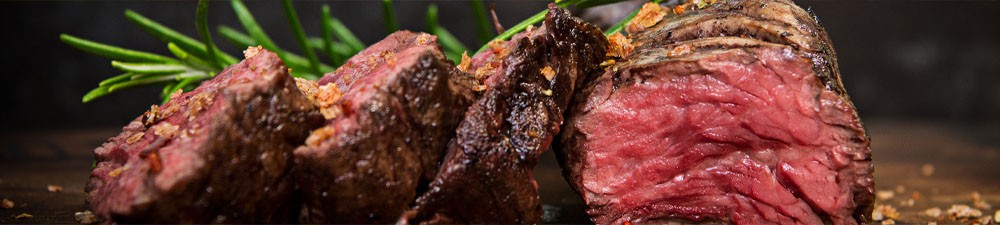
How to cook hanger steak (longhaas) in 6 steps
In Paris they've been eating it in bistros for decades. Here in the Netherlands we've only got to know it recently: hanger steak, or longhaas. A steak with a coarse grain, a firm bite and a flavour that has nothing to hide from the big names. The secret is in the cooking. Sear the hanger steak in a hot pan for 1 minute per centimetre per side, take it off the heat at 50 to 52 °C and let it rest for 5 to 10 minutes. Slice it across the grain and you've got a bistro steak that everyone at the table will keep talking about.
Hanger steak at a glance
- Hanger steak (in Dutch: longhaas) is the diaphragm muscle of the cow. It hangs freely between the kidneys and the diaphragm and is in motion all day.
- A cow has only one hanger steak. That muscle consists of two halves with a thick sinew in between.
- That sinew has to come out. A butcher splits the hanger steak by hand and ends up with two steaks.
- Hanger steak is called onglet ("little hook") in French, hanging tender in English and dikke kraai in Flanders.
- Hanger steak has a coarse grain and a firm bite. Always slice it across the grain.
- Cook hanger steak for 1 minute per centimetre of thickness per side. That's usually 2 to 3 minutes per side.
- Don't cook hanger steak beyond medium. Medium rare is 52 to 54 °C after resting.
- Count on 150 to 250 grams of hanger steak per person as a main course for an average eater.
- Hanger steak is usually slightly cheaper than a ribeye of the same breed.
What is hanger steak, exactly?
Hanger steak is the muscle that moves the diaphragm, and so makes the lungs work. That explains the Dutch name. Because that muscle is constantly working, it's well supplied with blood. That gives a deep, almost mineral-rich beef flavour you won't find in popular cuts like ribeye or entrecote. In Paris, onglet has been the bistro steak for decades. In the Netherlands, hanger steak stayed unknown for a long time, until BBQ enthusiasts and home cooks discovered what the French had known all along: few steaks have so much flavour for such a friendly price.
A cow has only one hanger steak: one muscle that consists of two halves, with a thick sinew in between. You can't just take that sinew out. It has to come out precisely, without wasting unnecessary meat. The membrane has to be removed and the edges trimmed to an even thickness. If that's not done properly, you end up with tough meat. That's why our Master Butchers split and trim every hanger steak by hand. After splitting you're left with two steaks that you can put straight from the packaging into the pan or onto the grill.
Which hanger steak should you choose?
We carry hanger steak in two breeds. We advise against a hanger steak from a lean dairy breed. With such a coarse grain you need marbling, otherwise the meat ends up dry and tough. The Black Angus USDA Prime is the all-rounder. Prime is the highest American quality grade, and the fat melts through the coarse fibres as it cooks. For the ultimate experience, choose Australian Wagyu. The extreme marbling melts from the inside out through the meat, while the coarse grain gives just enough structure. You get the full flavour of hanger steak with the buttery texture of Wagyu. Can't decide? Feel free to call or email us via customer service.
Rules of thumb for the perfect hanger steak
- Take it out of the fridge an hour or two ahead. A steak at room temperature cooks more evenly.
- Salt generously. Hanger steak can take a generous amount of coarse sea salt.
- Use a hot cast-iron pan. High heat gives the crust hanger steak needs.
- 1 minute per centimetre per side. That's the rule of thumb. A 2.5 cm steak gets about 2.5 minutes per side.
- Stop at medium rare. Hanger steak is low in fat and can overcook quickly.
- Slice across the grain. Always.
“Hanger steak deserves far more attention than it gets. In terms of flavour, it holds its own against steaks twice the price.” — Bert-Jan Lantinga, founder and Master Butcher
How to cook hanger steak in 6 steps
- Take the hanger steak out of the fridge an hour or two ahead and pat it dry. That way the steak comes to room temperature, and a dry surface browns better.
- Season with coarse sea salt. Don't be shy with it. Add pepper if you like.
- Heat a cast-iron pan. Put the pan over high heat with a splash of oil.
- Sear the hanger steak until brown. Count on 1 minute per centimetre of thickness per side, usually 2 to 3 minutes per side, until a nice brown crust forms.
- Take the hanger steak off the heat at 50 to 52 °C and let it rest. Rest it for 5 to 10 minutes on a board or warm plate.
- Slice and serve. Slice the hanger steak across the grain into thin slices of no more than half a centimetre.
Which core temperature suits hanger steak?
With hanger steak, a meat thermometer is not a luxury but a necessity. The meat is lean and overcooks quickly. The temperature keeps rising another 2 to 3 °C while resting, so take the steak off the heat a little earlier than you think. Guideline temperatures after resting:
- Rare: 49 to 51 °C
- Medium rare: 52 to 54 °C
- Medium: 55 to 57 °C
Our tip: go for medium rare. Beyond medium, hanger steak gets dry and tough.
Hanger steak on the BBQ
Hanger steak is a great BBQ steak. Set up direct heat of 230 to 250 °C and grill the steak for 2 to 3 minutes per side. Halfway through, give the steak a quarter turn for nice grill marks. Take the hanger steak off the grill at 50 °C and let it rest for 5 to 10 minutes. The temperature then rises another 2 to 3 °C to a perfect medium rare.
Hanger steak in the oven or sous vide
Prefer to finish the hanger steak in the oven? Then sear it all over in a hot pan first and finish it in a preheated 120 °C oven until the core reaches 50 to 52 °C. Sous vide works too: cook the hanger steak in a 54 °C water bath for 2 to 4 hours. The long cooking time makes the coarse fibres extra tender. Then sear it briefly in a hot pan for a crispy crust. Our vacuum packaging is heat-resistant, so the hanger steak can go into the water bath in its packaging.
Marinating hanger steak
Thanks to its coarse grain, hanger steak absorbs a marinade really well. A marinade with soy sauce, garlic, ginger and sesame oil works wonderfully, but a classic combination of olive oil, garlic and rosemary is just as good. Marinate the steak in the fridge for at least 2 hours. Make sure the marinade isn't too acidic, because acid actually makes the meat tougher.
Slicing hanger steak: always across the grain
The coarse muscle fibres run clearly in one direction. Slice across that direction into thin slices of no more than half a centimetre. That breaks up the fibres so every bite is tender. Slice with the grain and you're left with a tough steak, however well you've cooked it.
What to serve with hanger steak
Hanger steak has plenty of flavour, so you don't need much with it. Salt and pepper alone is enough. Want more? A chimichurri, a peppercorn sauce, a garlic herb butter or a ponzu sauce for an Asian twist all work. Serve the slices with roasted potatoes or fries and a salad. For wine, go for a full-bodied red with character, such as a syrah or a cabernet sauvignon. With chimichurri, an Argentinian malbec is a perfect match. Looking for inspiration? Try our crispy rice cakes with Wagyu hanger steak, avocado and furikake.
Fun facts about hanger steak
- Four names for one steak. In the Netherlands it's longhaas, in France onglet, in English hanger steak and in Flanders dikke kraai.
- A little hook. The French name onglet means "little hook", after the way the muscle hangs from the diaphragm.
- One muscle, two steaks. A cow has only one hanger steak. After the sinew is removed, the butcher splits it into two steaks. That makes it scarce, but also special.
- Fits nose-to-tail. With hanger steak you waste less and discover more exceptional cuts of the cow.
- Not the same as petite tender. Hanger steak has a coarse grain and a firm bite. Petite tender (diamanthaas) has a fine grain and is almost as tender as tenderloin.
- Not the same as skirt. Skirt steak sits in the same area, but is thinner and longer.
Questions about cooking hanger steak
What is hanger steak? Hanger steak is the diaphragm muscle of the cow. It's a working muscle that's constantly in motion, which gives the meat a coarse grain and an intense beef flavour. In French it's called onglet, in Dutch longhaas.
Is hanger steak tender? Hanger steak is a firmer steak with a bite, so you can't compare it to the tenderness of tenderloin. But with the right preparation and slicing across the grain, hanger steak is surprisingly tender. Core temperature and breed are everything here.
How long do you cook hanger steak? Count on 1 minute per centimetre of thickness per side in a hot pan. That's usually 2 to 3 minutes per side. Go by core temperature: take it off the heat at 50 to 52 °C for a medium rare steak after resting.
What is the difference between hanger steak and petite tender? Hanger steak has a coarse grain, more bite and a more intense flavour. Petite tender has a fine grain and is much more tender and subtle. Hanger steak is closer to bavette, petite tender is closer to tenderloin.
How do you slice hanger steak? Always across the grain, into thin slices. With hanger steak, that's the difference between tender and inedible.
Can you braise hanger steak? Technically yes, but it's not ideal. Hanger steak is at its best as a steak. If you braise it for 2 to 3 hours at a low temperature, the meat gets soft, but it loses its characteristic bite.
Can you cook hanger steak sous vide? Absolutely. Cook it for 2 to 4 hours at 54 °C and then sear it briefly.
Which sauce goes with hanger steak? Salt and pepper is enough already. Want more? Chimichurri, peppercorn sauce, garlic butter or a ponzu sauce for an Asian preparation.
How much hanger steak do you need per person? As a main course, count on 150 to 250 grams for an average eater and 250 to 400 grams for a big eater. For a BBQ with several kinds of meat, 75 to 100 grams per person is enough.