







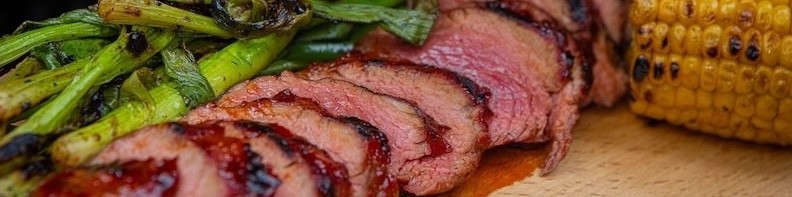
How to cook petite tender in 7 steps
Tenderloin, ribeye and entrecote are on everyone's list. The petite tender, or diamanthaas, usually stays in their shadow, even though it's the most tender little muscle in the whole shoulder. Almost as tender as tenderloin, with more flavour, and ready in a few minutes. Here's how to do it: sear the petite tender in a hot pan for 1 minute per centimetre per side, baste it with foaming butter, take it off the heat at 48 to 49 °C and let it rest for 5 minutes. Slice it across the grain and you've got a steak that's more than worth it.
Petite tender at a glance
- Petite tender (in Dutch: diamanthaas) is the teres major: a small muscle that sits on the shoulder blade of the cow.
- It's also known as Jewish fillet (jodenhaas in Dutch), shoulder tender or bistro filet.
- This muscle hardly does any work. That's why petite tender is almost as tender as tenderloin, and after the tenderloin one of the most tender cuts of beef.
- Petite tender is not the same as flat iron. Flat iron sits just above it, but is a different muscle.
- A petite tender from The Butchery weighs, depending on the breed, roughly 125 to 275 grams per piece.
- Cook petite tender for 1 minute per centimetre of thickness per side in a hot pan.
- Take petite tender off the heat at 48 to 49 °C. After resting that's medium rare (52 to 54 °C).
- The grain in petite tender runs lengthwise. Slice across it.
- Petite tender is great for steak tartare, carpaccio and tataki.
What is petite tender, exactly?
Petite tender sits in the shoulder of the cow, on top of the shoulder blade. It's a compact piece of meat with a fine texture and a distinct beef flavour. A shoulder works hard and usually gives you stewing meat, but the petite tender is the big exception. That muscle does almost nothing. That's why the meat is so tender and has so little fat.
Don't confuse petite tender with hanger steak or bavette. Those have more flavour thanks to the work they do, but are also firmer. Petite tender has worked less, so it's more tender and a touch more subtle in flavour. That's also why a sauce or a knob of butter goes so well with it.
Why is petite tender such an overlooked steak?
Petite tender has long been underrated. A few reasons:
- It's small. A cow has only two of these muscles, one per shoulder. There's not much more than a handful of steaks per animal.
- It's often not cut separately. Butchers prefer to process the shoulder in one go as stewing meat. Only a skilled butcher takes out the petite tender neatly.
- The shoulder has a bad reputation. If you think of shoulder as stewing meat, you don't expect a tender steak.
- The name says little. Diamanthaas, jodenhaas, petite tender: one cut with so many names that nobody knows what they're ordering.
In recent years petite tender has been on the rise. More and more restaurants put it on the menu, and we get that. It's a steak with the tenderness of a tenderloin at a friendlier price.
Which breed of petite tender should you choose?
We carry petite tender from several breeds. The Black Angus USDA Prime is grain-fed, richly marbled and soft in texture. The Angus Premium comes from cattle raised on the pampas of South America and is grass-fed and lean, with a pronounced beef flavour. The Simmentaler cattle graze for years on Alpine pastures, which gives the steak a full flavour. And for the ultimate experience, choose Wagyu. View all our petite tender and can't decide? Feel free to call or email us via customer service.
Rules of thumb for the perfect petite tender
- Use a hot pan. A heavy pan over high heat gives you a golden crust in a few minutes.
- Sear in clarified butter or oil first. Regular butter burns over high heat. That comes later, when you baste.
- 1 minute per centimetre per side. That's the rule of thumb. A 3 cm steak gets 3 minutes per side.
- Press it down briefly. That way the meat makes good contact with the hot pan.
- Stop at medium rare. Petite tender is lean. Cook it too far and it dries out.
- Don't pierce the meat. Use tongs, not a fork.
How to cook petite tender in 7 steps
- Take the petite tender out of the freezer. Do this 1 to 2 days in advance and let it thaw slowly in the fridge. Then take the steak out of the fridge at least half an hour before cooking so it can come to room temperature.
- Pat dry. A dry surface browns better.
- Season with salt and pepper. Nothing more is needed. Petite tender needs very little.
- Sear the petite tender all over. Heat clarified butter or oil in a heavy pan over high heat and lay the steak in. Press it down briefly. Count on 1 minute per centimetre of thickness per side, and turn the steak until it's golden brown all over.
- Baste in butter. Turn the heat down and add 50 grams of butter, optionally with a clove of garlic and a sprig of thyme. Spoon the foaming butter over the meat for a minute or two.
- Check the core temperature and let it rest. Insert the thermometer into the thickest part and take the petite tender out of the pan at 48 to 49 °C. Let it rest for 5 minutes on a warm plate or board.
- Slice and serve. Slice the petite tender across the grain into slices of about half a centimetre.
Which core temperature suits petite tender?
Use a meat thermometer, because measuring is much more reliable than watching the clock. The temperature keeps rising while it rests, so take the steak out about 3 °C early. Guideline temperatures after resting:
- Rare: 48 to 50 °C
- Medium rare: 52 to 54 °C
- Medium: 56 to 58 °C
Our tip: go for medium rare. That's when petite tender is at its softest and juiciest.
Petite tender recipes


Basting: why butter makes your petite tender better
Basting means continuously spooning hot, foaming butter over the meat as it cooks. With a lean steak like petite tender, that's a smart move. The butter adds fat and flavour, and the golden crust looks even better. Do it after searing with the heat turned down, because butter burns quickly. Garlic and thyme in the butter add an extra layer of flavour.
Petite tender on the BBQ or in the oven
Petite tender also works on the BBQ or in the oven. Sear it first in the pan or on the hot zone of the BBQ for the golden crust. Then finish it in a 100 °C oven or on the indirect zone until the core reaches 48 to 49 °C. If your steak is no thicker than about 4 cm, the pan is enough.
Slicing petite tender: across the grain
With petite tender, the grain runs lengthwise. Slice the steak across it into slices of about half a centimetre. That matters for mouthfeel, and with petite tender it's easy to do. Use a sharp knife without a serrated edge.
What to serve with petite tender
Petite tender is tender and subtle in flavour, so you can go in any direction. Think fried onions and mushrooms, a peppercorn sauce or a red wine jus. Also see our recipes. A knob of herb butter melts straight over the warm slices. Serve the steak with roasted potatoes or fries and a fresh salad. For wine, go for a supple red, such as a pinot noir or a merlot.
Fun facts about petite tender
- A name with a story. The oldest name is jodenhaas (literally "Jewish tenderloin"). Under Jewish dietary laws, meat from the hindquarters of the cow is not permitted, but the petite tender sits in the shoulder, at the front, and is allowed. The name stuck.
- A French classic. In the famous French brasserie Flo, petite tender is used for steak tartare. Find tartare and more in our recipes.
- Tip for tartare. Put the petite tender in the freezer for 10 minutes so the meat firms up. That makes it easier to cut into fine cubes.
- Neighbour of flat iron. Petite tender and flat iron sit close together in the shoulder, but they're two different muscles.
- Many names. In English, diamanthaas is called petite tender, teres major, Jewish fillet or bistro filet.
Questions about cooking petite tender
What is petite tender? Petite tender, in Dutch diamanthaas or jodenhaas, is a small, very tender muscle from the shoulder of the cow. It's also called teres major.
Where does petite tender come from? From the shoulder blade of the cow, in the shoulder. It's a muscle that does hardly any work, and that's why it's so tender.
Is petite tender the same as tenderloin? No. Tenderloin comes from the hindquarter, petite tender from the shoulder. Petite tender is almost as tender as tenderloin, but has a bit more flavour and a friendlier price.
How long do you cook petite tender? Count on 1 minute per centimetre of thickness per side in a hot pan. A 3 cm steak is therefore about 3 minutes per side. Go by core temperature: take it out at 48 to 49 °C for a medium rare steak after resting.
What is the core temperature of petite tender? Medium rare is 52 to 54 °C after resting. Take the steak out of the pan about 3 °C earlier. We'd rather not cook petite tender beyond medium (56 to 58 °C), because the meat is lean and dries out.
How much petite tender do you need per person? As a starter, for example steak tartare, count on 75 to 100 grams per person for an average eater and 125 to 150 grams for a big eater. As a main course, count on 175 to 200 grams per person.
What is basting? Basting means spooning hot, foaming butter over the meat as it cooks. You do it with a spoon, after searing, with the heat turned down.
Can you eat petite tender raw? Yes, petite tender is great for steak tartare, carpaccio and tataki.
Is petite tender the same as flat iron? No. Both come from the shoulder and sit close together, but they're different muscles.