







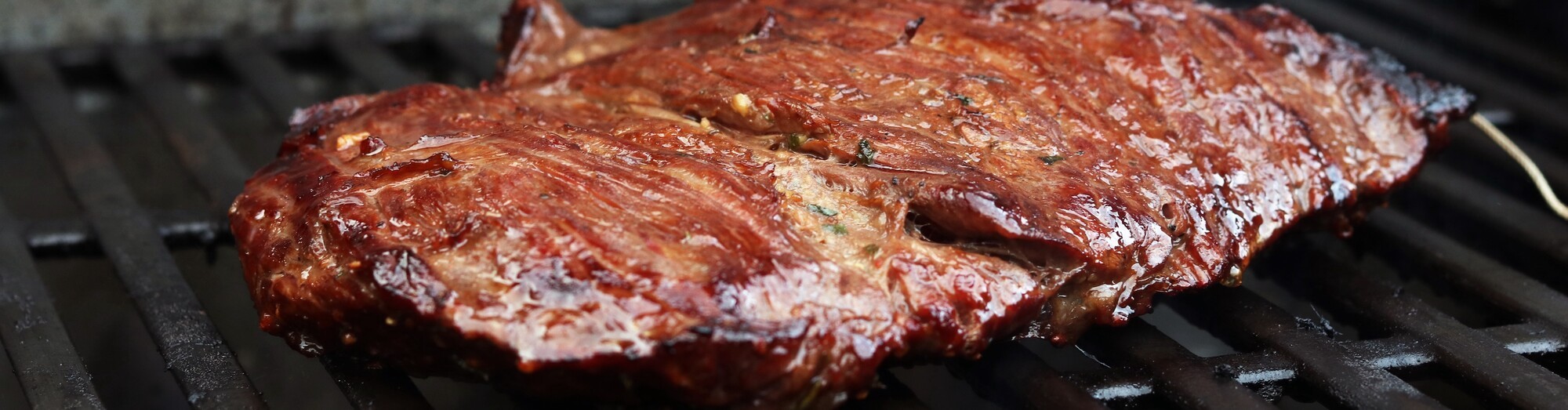
How to cook bavette in 6 steps
Bavette is tough. You hear it every now and then. But honestly? That's rarely the meat's fault. It usually goes wrong in two places: cooking it too long and slicing it with the grain. Here's how to cook bavette: 1 minute per centimetre per side in a hot pan, rest it for five minutes, then slice it across the grain. A bavette that's 3 centimetres thick is done in 6 minutes. After that, your slicing technique does the rest.
What is bavette?
Bavette comes from the flank of the cow. That's the belly wall, the area between the hindquarter and the brisket. It's a long, flat muscle that works all day. In Dutch, you might also know it as vanglap.
You can taste that work. Bavette has a lot of beefy flavour, more than many other steaks, and a firm bite. You can also see the grain with the naked eye: the coarse muscle fibres that run in one direction through the meat. That doesn't make bavette tough, but it does make it a steak with character. You just have to keep it in mind when you slice it. More on that in a moment.
A bavette is usually around 2 to 3.5 centimetres thick, which means it's ready in a few minutes. A muscle with this much character calls for a short, hot cook in the pan or on the BBQ. Bavette also takes a marinade well, so you can happily play around with flavours.
Soft, bold or luxurious: which bavette suits you?
Want a pronounced beefy flavour? Then a grass-fed Black Angus from Argentina is a great choice. Looking for more marbling and a softer bite? Take a look at a Black Angus USDA Prime. And if it's going to be a special evening, there's wagyu. This is our full range of bavette. Can't decide? Our team is happy to help you choose via customer service.
How to cook bavette in 6 steps
- Take the bavette out of the fridge. Do this at least half an hour ahead and unpack it straight away. Is your bavette frozen? Let it thaw slowly in the fridge first. A bavette at room temperature cooks more evenly.
- Dry, salt, pepper. Pat the bavette thoroughly dry. Moisture on the meat means steaming instead of searing. Season just before cooking with salt and pepper or with our steak seasoning.
- Turn the pan up to its highest heat. Use a heavy frying pan or cast-iron pan and a splash of oil with a high smoke point, such as peanut or sunflower oil. Only when the oil starts to shimmer does the bavette go in.
- Cook 1 minute per centimetre per side. Thicker means longer, thinner means shorter. A bavette of 2 centimetres takes 2 minutes per side, one of 3 centimetres takes 3 minutes. Cooking on gas? Keep the steak moving. On induction, just leave it where it is.
- Let the bavette rest. Take it out of the pan, put it on a plate or board for five minutes and let the juices redistribute. Got a knob of butter, a garlic clove and a sprig of thyme? Add them to the pan for the last minute and spoon the butter over the meat.
- Slice across the grain. This is the step that turns a good bavette into a great one. See the next heading.
What's the right core temperature for bavette?
With a meat thermometer you know for sure. Take the bavette off the heat 3 to 5 °C early, because it keeps cooking while it rests. These are the guide temperatures after resting:
- Rare: 48 to 50 °C
- Medium rare: 52 to 54 °C
- Medium: 56 to 58 °C
Our favourite is medium rare. With a hard-working muscle like this, a higher doneness makes it firm more quickly.
Slicing bavette: look at the grain first
Put the cooked bavette in front of you. See those long lines in the meat? Those are the muscle fibres. Their direction is the grain. All you have to do is place your knife at a right angle to those lines and slice the bavette into thin slices of about half a centimetre.
Why does it make such a difference? You cut the long fibres into short pieces, so you don't have to chew your way through them. Slice with the grain and you eat long fibres instead. And yes, then you'll taste a tough bavette. Want more slicing tips? Read our guide on cutting steak.
Bavette on the BBQ
Bavette and the BBQ are a perfect match. Bavette is long, flat and cooks quickly, and its robust flavour stands up well to smoke and fire. Set up a hot zone with direct heat and a cooler zone without. Put the bavette on the hot zone, cook it 1 minute per centimetre per side here too and turn it only once. Flames flaring up from dripping fat? Move the bavette to the cool side for a moment.
Take the bavette off the grate at 48 to 50 °C for a medium rare result. Let it rest for five minutes, then slice across the grain. Want more flavour? Rub the bavette beforehand with one of our BBQ rubs.
What do you serve with it?
Bavette can handle a bit of punch. Think of a herb butter, a glossy steak jus or a fresh steak sauce. Add fries and a salad and you've got a bistro on your plate. This robust flavour also pairs well with a powerful red wine, such as a malbec, syrah or sangiovese.
Questions about cooking bavette
Which part of the cow does bavette come from?
Bavette comes from the flank of the cow. That's the belly wall. Because this muscle does a lot of work, bavette has plenty of flavour and a clearly visible grain.
How long do you cook a bavette?
Allow 1 minute per centimetre per side over high heat. A bavette of 3 centimetres takes 3 minutes per side. Then let it rest for five minutes.
Is bavette tough?
Not if you cook it briefly and slice it across the grain. Cooking it too long and slicing it with the grain are the two main reasons bavette turns tough.
How can I tell which way the grain runs?
Look at the meat. The muscle fibres run as long lines in one direction through the bavette. Place your knife at a right angle to those lines and you're slicing across the grain.
Should you marinate bavette?
You don't have to, but you can. Bavette has a firm structure and takes a marinade well. Marinate it for a few hours with oil, garlic and lemon, and pat the bavette thoroughly dry before cooking.
Recipes with Bavette


