







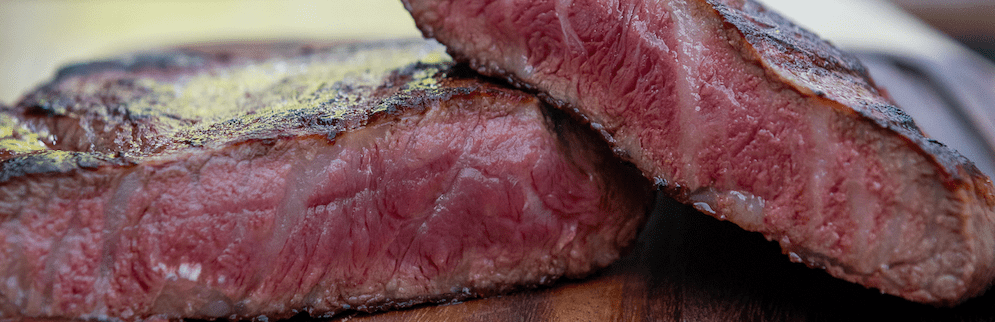
How to cook flat iron steak in 7 steps
Ever wanted to cook a flat iron, but weren't sure how? No worries, it's easier than you think! Cooking flat iron is all about heat and timing. Sear the steak in a blazing hot pan until browned, take it off the heat at around 50 °C, rest it for five minutes and slice it against the grain. You only need an oven for thick cuts.
Flat iron at a glance
- Flat iron steak comes from the shoulder (the chuck) of the cow. It's the cut known in English as top blade.
- A tough sheet of sinew runs through the middle of the top blade. A butcher splits the cut and removes the sinew, which gives you two flat, tender steaks.
- The same muscle is still sold as stewing meat in the Netherlands, as chuck stewing steaks (sukadelapjes) and chuck roast (sukadebraadstuk). The sinew is still in those.
- Flat iron is also called feather blade, butler's steak or oyster blade steak.
- After the tenderloin, flat iron is one of the most tender cuts of beef.
- A flat iron from The Butchery weighs roughly 250 to 500 grams per piece, depending on the breed.
- Cook flat iron for 1 minute per centimetre of thickness per side in a hot pan.
- Medium rare is 52 to 54 °C at the core after resting. Never cook flat iron beyond medium (56 to 58 °C), or it turns tough.
- Count on 175 to 200 grams of flat iron per person for an average eater.
What is flat iron, exactly?
Flat iron sits in the shoulder of the cow, in the chuck. It's a muscle that works hard, yet stays surprisingly tender. The same muscle is still sold as stewing meat, as chuck stewing steaks and chuck roast. The sinew is still in there, so that meat needs a long, slow simmer. Remove the sinew and you're left with a flat steak of even thickness and a robust, full beef flavour. That's why we call flat iron the underdog of steaks.
The steak has an even thickness and a fine grain that's easy to see once it's cooked. That makes flat iron easy to cook: the steak cooks through at the same speed all over. It also does very well on the BBQ.
Which breed of flat iron should you choose?
We carry flat iron steak from several breeds. Ask our butcher Harold for his favourite and he doesn't need long to think: the flat iron from Black Angus USDA Prime. Grain-fed, richly marbled and soft in texture. At The Butchery you never get USDA Choice, always Prime. A grass-fed flat iron, such as the Black Angus from Argentina, usually has a pronounced beefy flavour. And for the ultimate experience, choose the Wagyu flat iron from Australian Wagyu with a marbling score of BMS 8+. View all our flat iron and can't decide? Feel free to call or email us via customer service.
Why you should never overcook flat iron
Flat iron is tender, but only if you don't cook it too long. These are the rules of thumb:
- Use a hot pan. A cast-iron or heavy pan over high heat gives you a brown, crispy crust in a few minutes.
- Sear it dry. Pat the steak dry before cooking. A dry surface browns better.
- Keep it simple. Salt and pepper is enough. The flavour is in the meat.
- Don't pierce the meat. Use tongs, not a fork, so the juices stay in the steak.
- Stop at medium. Beyond 58 °C, flat iron gets tough and dry.
How to cook flat iron in 7 steps
- Take the flat iron out of the freezer. Do this 1 to 2 days in advance and let it thaw slowly in the fridge. Then take the steak out of the fridge at least half an hour before cooking and unwrap it so it can come to room temperature.
- Pat dry. A dry surface browns better. Leave the steak whole, there's nothing to cut into.
- Season with salt. Add pepper or a rub of your choice if you like. Nothing more is needed.
- Sear the flat iron in the pan. Heat a heavy pan over high heat, add a splash of oil that can take the heat and lay the steak in the pan. Count on 1 minute per centimetre of thickness per side: a 2 cm steak gets 2 minutes per side, a 3 cm steak gets 3 minutes. Cook until a nice brown crust forms.
- Check the core temperature. Insert the thermometer into the centre of the thickest part. Around 50 °C? Then the flat iron is done. Still well below that? Keep cooking or finish it in the oven (see below for when that's handy).
- Let the flat iron rest. Take it off the heat at around 50 °C and let it rest for 5 minutes on a board or warm plate. The juices redistribute and the core temperature keeps rising.
- Slice and serve. Slice the flat iron against the grain into thin slices of about half a centimetre.
Which core temperature suits flat iron?
Use a meat thermometer. Measuring is much more reliable than watching the clock. Take the flat iron off the heat about 3 °C early, because the temperature keeps rising while it rests. Guideline temperatures after resting:
- Rare: 48 to 50 °C
- Medium rare: 52 to 54 °C
- Medium: 56 to 58 °C
Our tip: go for medium rare. That's when flat iron is at its most tender and juicy.
Flat iron in the oven: for thick cuts
For most flat iron steaks the pan is enough. If your steak is thicker than about 3 cm, you can finish it in the oven after searing. Always sear it in the pan first: the brown crust comes from the Maillard reaction, and you don't get that at 100 °C in the oven. Then place the steak on a rack over a baking tray. That way the warm air can circulate all around it and the crust stays crisp. In a baking dish the steak sits in its own juices and the crust loses its bite. Preheat the oven to 100 °C and go by core temperature. Take the flat iron out at 50 °C for a medium rare steak after resting.
Flat iron on the BBQ
Flat iron and the BBQ are made for each other. Set up two zones: a hot zone with direct heat and a cooler zone without fire. Place the flat iron on the indirect side first, close the lid and let it slowly come up to temperature. Is the core around 45 to 47 °C? Then slide the steak to the hot zone and sear it for a minute or two per side until nicely browned. This is also called reverse sear. Got wood or charcoal with a nice smoky flavour? Then the flat iron gets an extra layer of flavour. Also see our BBQ recipes.
Slicing flat iron: thin slices, against the grain
The best moment: carving the flat iron. First find the direction of the muscle fibres, that's the grain. With flat iron it's fine and easiest to see after cooking. Place your knife at a right angle to it and cut slices of about half a centimetre. Use a sharp knife without a serrated edge. That way you don't have to chew on long fibres and the steak stays tender.
Flat Iron recipes


What to serve with flat iron
Flat iron has a robust, full flavour, so it can handle plenty. Think rosemary roasted potatoes, roasted vegetables or a fresh rocket salad with balsamic. A herb butter or peppercorn cream sauce goes well too. Slice the steak thinly? Then it's also great in a steak sandwich or fajitas. For wine, go for a full-bodied red, such as a cabernet sauvignon or a zinfandel.
Questions about cooking flat iron
What is flat iron steak? Flat iron steak comes from the shoulder (the chuck) of the cow. In English the cut is called top blade. The butcher removes the tough sheet of sinew in the middle, leaving a flat, tender steak.
How long do you cook flat iron? Count on 1 minute per centimetre of thickness per side in a hot pan. A 2 cm steak is therefore about 2 minutes per side. Go by core temperature: take it off the heat at 50 °C for a medium rare steak after resting. If the steak is thicker than 3 cm, you can finish it in the oven after searing.
Is flat iron tender? Yes, after the tenderloin, flat iron is one of the most tender cuts of beef. It only gets tough if you cook it too long or slice with the grain.
What core temperature should flat iron reach? Medium rare is 52 to 54 °C after resting. Take the steak off the heat about 3 °C earlier. Don't cook flat iron beyond medium (56 to 58 °C).
How much flat iron do you need per person? Count on 175 to 200 grams per person for an average eater and 250 to 300 grams for a big eater. A flat iron of 400 to 500 grams is therefore enough for 2 people.
Should you rest flat iron? Yes, let the steak rest for 5 minutes after cooking. The juices redistribute through the meat and the core temperature keeps rising.