







Roulade with entrecote Black Angus en pork tenderloin Livar
Roulade with entrecote Black Angus en pork tenderloin Livar

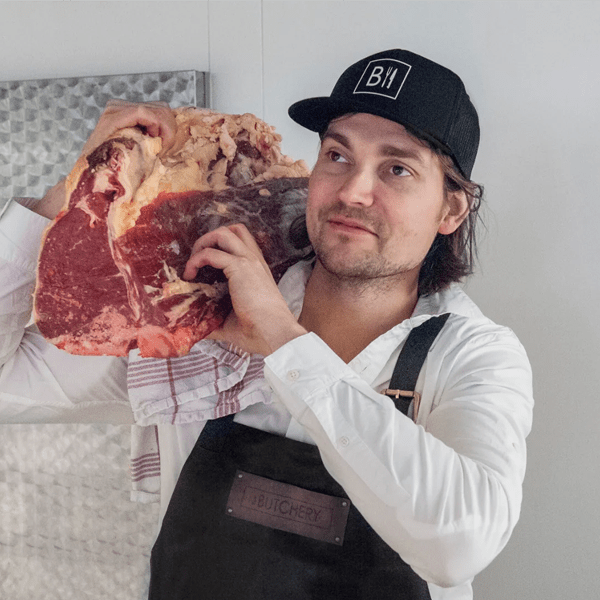
A beautiful loin roast filled with pork tenderloin, offering a firm bite. Perfect for special occasions and moments worth celebrating!
Bert-Jan Lantinga
Loin Roll Roast with Pork Tenderloin Filling
A loin roll roast is a rolled cut of meat that is tied together with butcher’s string. In this case, it consists of rolled loin with a pork tenderloin filling at the center. A festive roast, perfect for special occasions and moments worth celebrating.
An entrecote, loin, or ribeye roll roast is a festive cut of meat that can be prepared in several ways. Below you’ll find a practical guideline. Scroll through and choose your preferred cooking method!
Low & slow preparation for entrecote, loin, or ribeye roll roast (sear & finish)
Plan ahead: thaw the meat a few days in advance (or a few hours in cold water) and remove it from the refrigerator 5 hours beforehand to allow it to reach room temperature.
Preheat the oven to 120°C for even cooking, and heat the pan or grill to maximum temperature.
Sear or grill the meat until browned all around in a large pan with butter or on the grill, ensuring the fat edge becomes nicely crispy.
Transfer the meat to the preheated oven. Place the seared roast in an oven dish and add the cooking fat.
Timing: use the schedule below for planning; times are indicative only.
Measure the core temperature at all times for these cuts. Use the temperatures listed below.
Rest: let the meat rest for 10 minutes before slicing and serving.
Season the meat after searing or afterwards with salt, pepper, or a rub of your choice.
Final core temperatures
Rare: 52°C
Medium rare: 54°C
Medium: 57°C
Rosé / well done: 62°C
Allow for a total cooking time of approximately 2 hours.
Reversed sear entrecote, loin, or ribeye roll roast (cook & finish on high heat)
Plan ahead: thaw the meat a few days in advance (or a few hours in cold water) and remove it from the refrigerator 5 hours beforehand to reach room temperature.
Preheat the oven or BBQ to 60°C.
Cook the meat until it reaches the target core temperature minus 2°C. The final 2 degrees will be reached during searing.
Grill or sear the meat until browned and crispy on all sides, until the desired core temperature is achieved.
Measure the core temperature at all times. Use the temperatures listed below.
Rest: let the meat rest for 10 minutes before slicing and serving.
Season the meat after searing or afterwards with salt, pepper, or a rub of your choice.
Final core temperatures
Rare: 52°C (beef, veal)
Medium rare: 54°C (beef, veal)
Medium: 57°C (beef, lamb, veal)
Rosé / well done: 62°C (lamb)
Allow for a total cooking time of approximately 3 hours.
Sous vide preparation for loin, entrecote, or ribeye roll roast
Plan ahead: thaw the meat a few days in advance (or a few hours in cold water) and remove it from the refrigerator 5 hours beforehand to reach room temperature.
Preheat the water bath so the times below apply. Make sure the vacuum bag is well sealed. You may season and re-vacuum the meat yourself, but usually the original packaging can go straight into the water bath.
Timing: set the sous vide stick according to the schedule below. If the meat is still frozen, add 1 hour.
Sear the roast in a pan or on the BBQ until golden brown. A blowtorch can also be used; during searing or torching, the internal temperature will not rise further.
Rest: let the meat rest for 10 minutes before slicing and serving.
Season the roast halfway through or afterwards with salt, pepper, or a rub of your choice.
Sous vide settings for beef roll roast
Rare: 52°C for 3 hours
Medium rare: 54°C for 3 hours
Medium: 57°C for 3 hours
Ingredients
rundvlees, varkensvlees, specerijen (koriander, peper, gember, foelie, kruidnagel, kardemom, chilies).Nutritional value
| Type | Per 100g |
|---|---|
| Energie (kJ) | N/B |
| Energie (kcal) | N/B |
| Vet (g) | N/B |
| Verzadigd vet (g) | N/B |
| Koolhydraten (g) | N/B |
| Suikers (g) | N/B |
| Vezels (g) | N/B |
| Eiwitten (g) | N/B |
| Zout (g) | N/B |
Roulade with entrecote Black Angus en pork tenderloin Livar
Dit product is momenteel niet op voorraad.
Mail mij bij voorraad
Laat je e-mailadres achter en ontvang een bericht zodra dit product weer op voorraad is.
Je ontvangt eenmalig een bericht zodra dit product weer leverbaar is. Je wordt hiermee niet aangemeld voor onze nieuwsbrief.
+ Lekker makkelijk
+ Altijd lekker
- Next day delivery or select a preferred day
- Starting at € 125,- FREE delivery.
- Quick frozen and vacuum packed
A beautiful loin roast filled with pork tenderloin, offering a firm bite. Perfect for special occasions and moments worth celebrating!
Bert-Jan Lantinga
-
Product Information
-
Preparation
-
Voedingswaarde
A beautiful loin roast filled with pork tenderloin, offering a firm bite. Perfect for special occasions and moments worth celebrating!
Bert-Jan Lantinga
Loin Roll Roast with Pork Tenderloin Filling
A loin roll roast is a rolled cut of meat that is tied together with butcher’s string. In this case, it consists of rolled loin with a pork tenderloin filling at the center. A festive roast, perfect for special occasions and moments worth celebrating.
An entrecote, loin, or ribeye roll roast is a festive cut of meat that can be prepared in several ways. Below you’ll find a practical guideline. Scroll through and choose your preferred cooking method!
Low & slow preparation for entrecote, loin, or ribeye roll roast (sear & finish)
Plan ahead: thaw the meat a few days in advance (or a few hours in cold water) and remove it from the refrigerator 5 hours beforehand to allow it to reach room temperature.
Preheat the oven to 120°C for even cooking, and heat the pan or grill to maximum temperature.
Sear or grill the meat until browned all around in a large pan with butter or on the grill, ensuring the fat edge becomes nicely crispy.
Transfer the meat to the preheated oven. Place the seared roast in an oven dish and add the cooking fat.
Timing: use the schedule below for planning; times are indicative only.
Measure the core temperature at all times for these cuts. Use the temperatures listed below.
Rest: let the meat rest for 10 minutes before slicing and serving.
Season the meat after searing or afterwards with salt, pepper, or a rub of your choice.
Final core temperatures
Rare: 52°C
Medium rare: 54°C
Medium: 57°C
Rosé / well done: 62°C
Allow for a total cooking time of approximately 2 hours.
Reversed sear entrecote, loin, or ribeye roll roast (cook & finish on high heat)
Plan ahead: thaw the meat a few days in advance (or a few hours in cold water) and remove it from the refrigerator 5 hours beforehand to reach room temperature.
Preheat the oven or BBQ to 60°C.
Cook the meat until it reaches the target core temperature minus 2°C. The final 2 degrees will be reached during searing.
Grill or sear the meat until browned and crispy on all sides, until the desired core temperature is achieved.
Measure the core temperature at all times. Use the temperatures listed below.
Rest: let the meat rest for 10 minutes before slicing and serving.
Season the meat after searing or afterwards with salt, pepper, or a rub of your choice.
Final core temperatures
Rare: 52°C (beef, veal)
Medium rare: 54°C (beef, veal)
Medium: 57°C (beef, lamb, veal)
Rosé / well done: 62°C (lamb)
Allow for a total cooking time of approximately 3 hours.
Sous vide preparation for loin, entrecote, or ribeye roll roast
Plan ahead: thaw the meat a few days in advance (or a few hours in cold water) and remove it from the refrigerator 5 hours beforehand to reach room temperature.
Preheat the water bath so the times below apply. Make sure the vacuum bag is well sealed. You may season and re-vacuum the meat yourself, but usually the original packaging can go straight into the water bath.
Timing: set the sous vide stick according to the schedule below. If the meat is still frozen, add 1 hour.
Sear the roast in a pan or on the BBQ until golden brown. A blowtorch can also be used; during searing or torching, the internal temperature will not rise further.
Rest: let the meat rest for 10 minutes before slicing and serving.
Season the roast halfway through or afterwards with salt, pepper, or a rub of your choice.
Sous vide settings for beef roll roast
Rare: 52°C for 3 hours
Medium rare: 54°C for 3 hours
Medium: 57°C for 3 hours
Ingredients
rundvlees, varkensvlees, specerijen (koriander, peper, gember, foelie, kruidnagel, kardemom, chilies).Nutritional value
| Type | Per 100g |
|---|---|
| Energie (kJ) | N/B |
| Energie (kcal) | N/B |
| Vet (g) | N/B |
| Verzadigd vet (g) | N/B |
| Koolhydraten (g) | N/B |
| Suikers (g) | N/B |
| Vezels (g) | N/B |
| Eiwitten (g) | N/B |
| Zout (g) | N/B |
